
Why Consistent Concrete Supply Is Critical for Structural Strength

February 2, 2026
1. Introduction
In construction, strength is not determined by a single concrete pour — it is built through consistency across every stage of the structure. Even when the correct concrete grade is used, variations between batches or interruptions in supply can compromise structural integrity. In “large projects,” especially, consistent Ready Mix Concrete (RMC) supply plays a crucial role in achieving uniform strength, durability, and long-term performance.
Inconsistent concrete can lead to weak joints, cracks, and uneven load transfer — issues that may not be visible immediately but emerge over time. This is why leading builders and engineers rely on trusted RMC partners like Aparna RMC, known for maintaining uniformity, precision, and uninterrupted supply across projects of all scales.
This blog explains why consistency in concrete supply matters and how Aparna RMC ensures structural strength from foundation to finish.
2. What Does Consistent Concrete Supply Mean?
Consistent concrete supply refers to the ability to deliver uniform concrete quality, strength, and workability across multiple pours — without variation between batches.
This includes consistency in:
- Mix proportions
- Strength grade
- Workability (slump)
- Setting time
- Raw material quality
- Delivery timing
When concrete consistency is maintained, the structure behaves as a single, unified system rather than separate segments.
3. How Inconsistent Concrete Affects Structural Strength
Even small variations in concrete quality can create long-term structural problems.
a. Formation of Cold Joints
Cold joints occur when fresh concrete is poured over concrete that has already begun to set.
Impact:
- Weak bonding between layers
- Reduced load transfer
- Increased risk of cracking and leakage
Consistent and uninterrupted supply helps prevent cold joints in slabs, beams, columns, and foundations.
b. Uneven Load Distribution
When different sections of a structure have varying strength levels, loads are not distributed evenly.
Result:
- Stress concentration
- Micro-cracks
- Reduced overall load-bearing capacity
Uniform RMC supply ensures that every part of the structure performs equally under load.
c. Differential Shrinkage and Cracking
Inconsistent water–cement ratios between batches lead to different shrinkage rates.
This causes:
- Surface cracks
- Structural cracks
- Poor finish quality
Aparna RMC maintains precise water-cement ratios through automated batching.
d. Reduced Durability Over Time
Variations in concrete quality increase:
- Water permeability
- Steel reinforcement corrosion
- Long-term maintenance requirements
Consistency is essential for achieving durability over decades.
4. Why Consistency Is More Critical in Large Projects
Large-scale projects such as: High-rise buildings Infrastructure works Industrial facilities Commercing with Many large-scale projects require continuous concrete pours over extended periods.
In such projects:
- Hundreds or thousands of cubic meters are poured
- Multiple structural elements are cast simultaneously
- Even minor inconsistencies multiply into major risks
This makes consistent RMC supply non-negotiable for large developments.
5. How Ready Mix Concrete Ensures Consistency
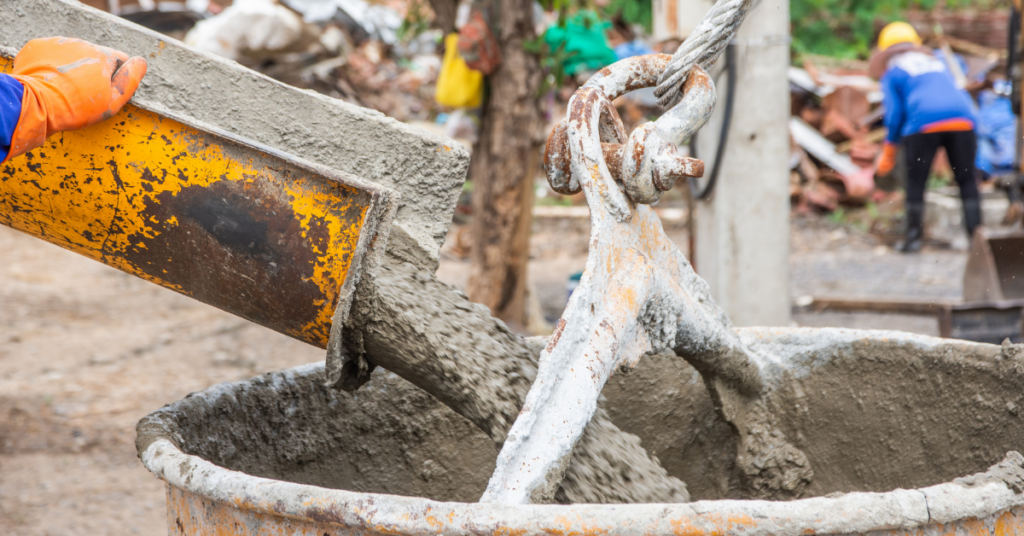
Ready Mix Concrete is specifically designed to eliminate the variability seen in site-mixed concrete.
Key reasons RMC ensures consistency:
- Centralised production in controlled environments
- Standardised mix designs
- Automated batching systems
- Continuous quality testing
- Uniform raw material sourcing
Aparna RMC strengthens these advantages with advanced technology and strong operational discipline.
6. How Aparna RMC Maintains Consistent Concrete Supply
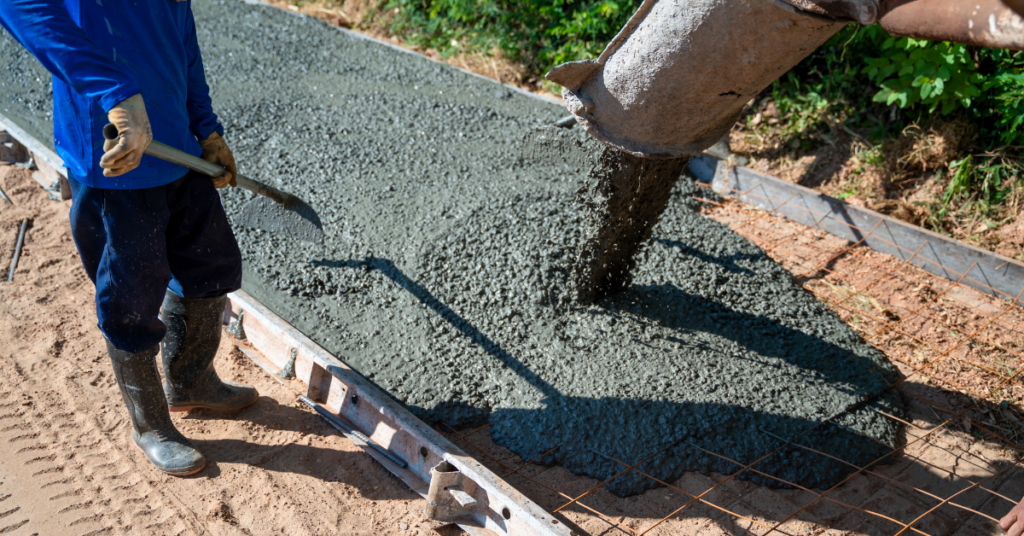
Aparna RMC has built its reputation around uniform quality and dependable supply.
a. SCADA-Controlled Batching Systems
All Aparna plants use automated SCADA systems that ensure:
- Accurate material measurement
- Uniform mix proportions
- Consistent strength across batches
- Zero manual estimation
This eliminates human error and batch-to-batch variation.
b. Standardised Mix Designs Across Plants
Aparna follows centralised mix design protocols to ensure:
- The same grade performs identically across locations
- Uniform workability and strength
- Reliable results across multiple pours
This is critical for projects supplied from more than one plant.
c. Stringent Raw Material Quality Control
Consistency begins with raw materials.
Aparna ensures:
- Certified cement sources
- Graded aggregates
- Clean M-sand
- Controlled moisture levels
Materials are tested regularly to maintain uniform input quality.
d. Strong Plant Network for Uninterrupted Supply
With 36+ strategically located plants, Aparna ensures:
- Shorter delivery distances
- Fresh concrete at “the” site
- No gaps in supply during large pours
Multiple plants can support a single project to maintain continuity.
e. Large Fleet & Dispatch Coordination
Aparna’s fleet of 350+ transit mixers and pumps allows:
- Continuous delivery cycles
- Backup vehicles during peak demand
- Smooth flow of concrete to “the” site
Dedicated dispatch teams coordinate timing to avoid interruptions.
f. Real-Time Quality Monitoring
Aparna conducts:
- Slump tests before dispatch
- Strength testing at set intervals
- Temperature and moisture monitoring
This ensures consistency not just in production, but also in performance at “the” site.
7. Benefits of Consistent Concrete Supply for Builders
Maintaining uniform concrete quality delivers multiple advantages:
- Improved structural safety
- Better load transfer
- Reduced cracking and seepage
- Enhanced durability
- Faster construction timelines
- Lower maintenance costs
- Better finishing quality
These benefits directly impact project success and long-term value.
8. Site-Mixed Concrete vs Consistent RMC Supply
| Aspect | Site-Mixed Concrete | Aparna RMC |
| Mix accuracy | Variable | Highly precise |
| Batch consistency | Inconsistent | Uniform |
| Risk of cold joints | High | Minimal |
| Strength reliability | Uncertain | Verified |
| Supply continuity | Limited | Assured |
| Quality testing | Rare | Mandatory |
9. Checklist: How to Ensure Concrete Consistency on Your Project
Before choosing an RMC supplier, confirm with “that they provide”
🔲 Automated batching systems
🔲 Standardised mix designs
🔲 Multiple plants for backup supply
🔲 Large fleet availability
🔲 Regular quality testing
🔲 Technical coordination with site teams
“Aparna RMC meets every one of these criteria” with “Aparna RMC consistently fulfills each of these critical benchmarks.
10. Conclusion
Structural strength depends not just on concrete grade, but on consistency across every pour. Inconsistent concrete can weaken joints, reduce load-bearing capacity, and shorten a building’s lifespan. By delivering uniform quality, uninterrupted supply, and precision-controlled mixes, Aparna RMC ensures that structures perform as designed — today and decades into the future.
For projects where strength, safety, and durability matter, “a” consistent Ready Mix Concrete supply is essential.
Choose Aparna RMC for concrete that delivers consistency you can build on.
11. FAQs
Q1: Why is consistent concrete supply important in slabs and foundations?
It prevents cold joints and ensures uniform load transfer.
Q2: Can inconsistent concrete cause cracks later?
Yes. Variations in strength and shrinkage often lead to cracking over time.
Q3: How does Aparna RMC ensure batch uniformity?
Through SCADA automation, standardised mix designs, and continuous testing.