Concrete for Extreme Conditions: How Aparna RMC Performs in Heat, Rain, and Heavy Loads
February 11, 2026
1. Introduction
Construction in India rarely happens under ideal conditions. Projects must withstand extreme heat, heavy monsoons, fluctuating humidity, and high structural loads — all of which place immense stress on concrete performance. When concrete is not designed for these conditions, it can lead to cracking, loss of strength, durability issues, and long-term structural damage.
This is why modern construction demands engineered Ready-Mix Concrete (RMC) that can adapt to environmental and structural challenges. Aparna RMC has developed specialised concrete solutions that perform reliably in extreme conditions, ensuring strength, workability, and durability regardless of external stresses.
In this blog, we explore how Aparna RMC designs and delivers concrete that performs consistently in heat, rain, and heavy-load environments.
2. Why Extreme Conditions Are a Challenge for Concrete
Concrete performance is highly sensitive to environmental and loading conditions. Extreme factors can disrupt hydration, weaken bonding, and reduce long-term durability.
Key challenges include:
- Rapid moisture loss in hot weather
- Excess water during monsoons
- Thermal cracking in large pours
- Increased stress from heavy loads
- Corrosion risks in aggressive environments
Without proper mix design and quality control, these factors can severely compromise structural integrity.
3. Concrete Performance in High-Temperature Conditions
a. Challenges of Hot Weather Concreting
In high temperatures, concrete tends to:
- Lose moisture rapidly
- Set faster than desired
- Develop plastic shrinkage cracks
- Lose workability before placement
These issues are common in summer months and heat-intensive regions.
b. How Aparna RMC Adapts Concrete for Heat
Aparna RMC uses several strategies to ensure optimal performance in hot conditions:
- Controlled water–cement ratio to prevent rapid evaporation
- Use of retarders to slow down the setting time
- Temperature-controlled batching for large pours
- Continuous moisture monitoring of aggregates
These measures ensure concrete remains workable and achieves target strength even under extreme heat.
4. Concrete Performance During Monsoons and High Moisture Conditions
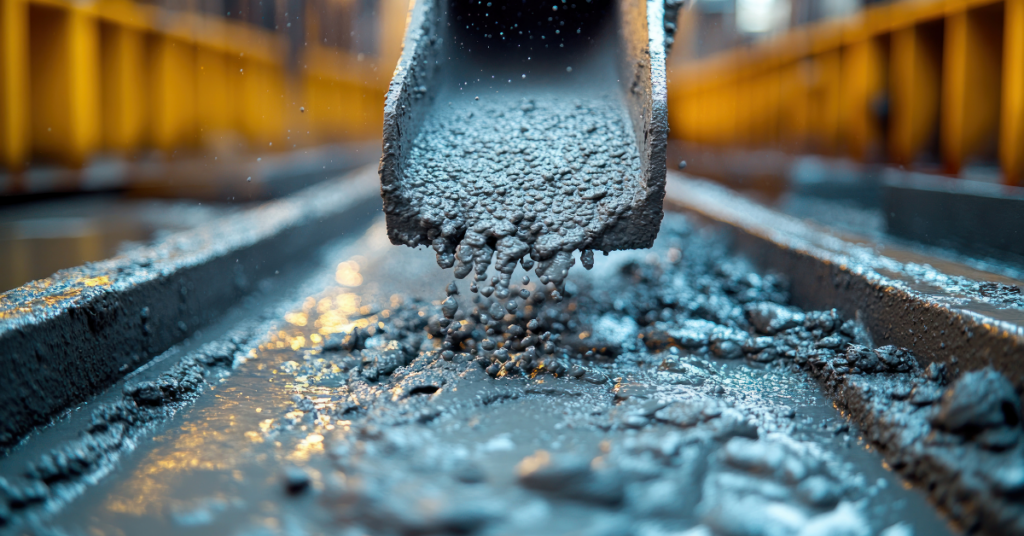
a. Challenges of Monsoon Concreting
Rain and high humidity can cause:
- Excess water entering the mix
- Reduced strength due to dilution
- Segregation of aggregates
- Delayed setting and finishing issues
Uncontrolled moisture is one of the biggest risks during monsoon construction.
b. Aparna RMC’s Monsoon-Ready Concrete Solutions
To counter these challenges, Aparna RMC implements:
- Moisture correction systems in batching plants
- Precise adjustment of water content
- Use of admixtures to maintain strength
- Protected material storage at plants
These controls ensure consistent concrete quality even during heavy rainfall.
5. Concrete Under Heavy Structural Loads
a. Why Heavy Loads Demand Special Concrete
Structures—such as high-rise buildings, bridges and flyovers, industrial floors, and infrastructure are subjected to continuous and dynamic loads. Concrete used here must offer high compressive strength, low permeability, and long-term durability.
b. Aparna RMC’s High-Strength Concrete Solutions
Aparna RMC supplies high-strength grades from M40 to M80, engineered to handle heavy loads without compromise.
Key features include:
- High compressive strength
- Enhanced bonding with reinforcement
- Reduced permeability
- Improved resistance to cracking
These mixes ensure safe load transfer and structural stability over decades
6. Managing Thermal Stress in Large Concrete Pours
“Large pours,” such as raft foundations and bridge decks, generate significant heat due to cement hydration.
Risks include:
- Thermal cracking
- Internal stress development
- Reduced durability
Aparna RMC’s Solutions:
- Temperature-controlled concrete
- Optimised cement content
- Use of supplementary materials to reduce “the” heat of hydration
- Controlled pour sequencing
These practices minimise thermal stress and enhance long-term performance.
7. Role of Technology in Extreme-Condition Concrete
Technology plays a key role in managing concrete performance.
a. SCADA-Controlled Batching
A “SCADA”-based automation ensures:
- Precise proportioning
- Accurate moisture correction
- Uniform quality across batches
b. Continuous Quality Testing
Aparna conducts:
- Slump tests
- Temperature checks
- Strength testing at different curing stages
This ensures that concrete meets design requirements despite environmental challenges.
c. GPS-Enabled Logistics
Timely delivery is crucial in extreme conditions. Aparna’s GPS-enabled fleet ensures:
- Reduced transit time
- Fresh concrete at “the site”
- Minimal loss of workability
8. Benefits of Using Aparna RMC for Extreme Conditions
Builders and engineers benefit from:
- Reduced cracking and shrinkage
- Improved durability in harsh climates
- Consistent strength performance
- Lower maintenance costs
- Safer structures under heavy loads
- Reliable construction timelines
These advantages make Aparna RMC a trusted partner for challenging projects.
9. Checklist: Choosing Concrete for Extreme Conditions
Before selecting concrete for challenging environments, ensure:
🔲 Weather-adapted mix designs
🔲 Automated batching with moisture control
🔲 High-strength grades for heavy loads
🔲 Temperature-controlled solutions for large pours
🔲 On-site technical support
🔲 Proven experience in extreme conditions
Aparna RMC meets all these requirements.
10. Conclusion
Extreme conditions demand more than standard concrete — they require engineered solutions designed for performance under stress. Whether it’s scorching heat, heavy rainfall, or massive structural loads, Aparna RMC delivers concrete that adapts, performs, and endures. Through advanced mix designs, automation, and rigorous quality control, Aparna ensures reliable concrete performance across all environments.
For projects where conditions are tough and expectations are high, Aparna RMC provides the confidence to build safely and sustainably.
Choose Aparna RMC for concrete engineered to perform under extreme conditions.
11. FAQs
Q1: Can concrete be poured during extreme heat or rain?
Yes, concrete can be poured during extreme heat or rain when proper precautions are taken. Aparna RMC uses specialized mix designs, controlled pouring methods, and protective measures to ensure durability, strength, and long-term performance.
Q2: Which concrete grades are suitable for heavy-load structures?
For heavy-load structures, higher-strength concrete grades like M40 and above are generally recommended. The exact grade depends on structural design, load conditions, durability needs, and specific engineering and safety requirements.
Q3: How does Aparna RMC prevent cracking in large pours?
Aparna RMC prevents cracking in large concrete pours by using temperature-controlled mixes, optimized cement content, controlled hydration processes, proper curing practices, and carefully planned placement techniques to reduce thermal stress.