
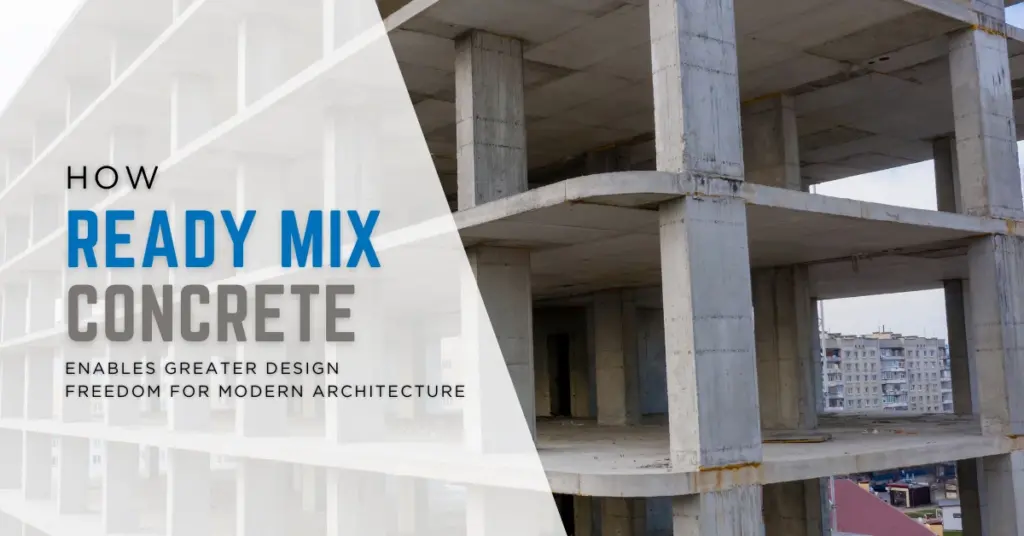
How Ready-Mix Concrete Enables Greater Design Freedom for Modern Architecture
February 16, 2026
1. Introduction
Modern architecture is no longer limited to simple forms and repetitive layouts. Today’s buildings feature open floor plans, longer spans, slimmer columns, curved elements, and bold structural expressions. Achieving such architectural freedom requires materials that offer not just strength, but also predictable performance and flexibility in execution.
Concrete plays a crucial role in turning architectural vision into reality. However, traditional site-mixed concrete often restricts design possibilities due to inconsistency and limited control. This is why architects and engineers increasingly rely on engineered Ready-Mix Concrete (RMC).
In this blog, we explore how Ready-Mix Concrete enables greater architectural design freedom and how Aparna RMC supports innovative, complex, and future-ready building designs without compromising safety or durability.
2. Why Architecture Demands More from Concrete Today
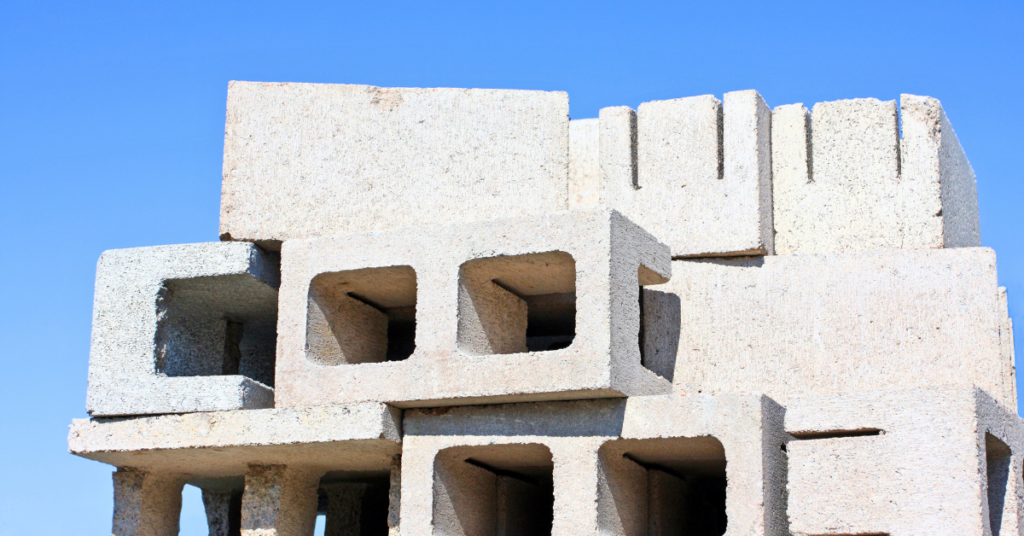
Modern architectural designs demand concrete that can support:
- Longer spans and open layouts
- Slimmer columns and thinner slabs
- Complex geometries and curves
- Cantilevers and floating elements
- Exposed concrete finishes
Such designs place higher demands on concrete performance, precision, and consistency.
3. Limitations of Traditional Concrete in Architectural Design
Site-mixed concrete often limits design freedom due to:
- Variations in strength across pours
- Inconsistent workability
- Difficulty in achieving complex shapes
- Higher risk of surface defects
- Limited control over finish quality
These constraints force architects to simplify designs or add unnecessary structural elements.
4. How Ready-Mix Concrete Expands Design Possibilities
Ready-Mix Concrete removes many of these limitations through engineered precision.
Key advantages include:
- Consistent strength across large spans
- Predictable setting and finishing behaviour
- Superior surface quality for exposed concrete
- Ability to support complex formwork
- Uniform performance across multiple pours
This enables architects to design freely while engineers maintain structural safety.
5. Role of Concrete Strength and Consistency in Design Freedom
Design freedom depends heavily on concrete reliability.
High-strength concrete enables:
- Reduced column sizes
- Longer beam spans
- More usable floor space
- Lightweight structural aesthetics
Consistency ensures that these design benefits are achieved without compromising performance.
6. How Aparna RMC Supports Architectural Innovation
a. Customised Mix Designs
Aparna RMC develops mix designs based on:
- Structural complexity
- Architectural intent
- Exposure conditions
- Finish requirements
This ensures concrete supports both design and performance goals.
b. High-Strength and High-Performance Concrete
Aparna supplies concrete grades suitable for:
- Slender structural elements
- High-rise buildings
- Long-span slabs
- Special architectural features
These mixes provide the strength needed for modern design concepts.
c. Controlled Workability for Complex Formwork
Engineered workability ensures concrete:
- Flows easily into complex moulds
- Reduces voids and honeycombing
- Delivers smooth surface finishes
This is critical for architectural concrete applications.
7. Supporting Exposed and Aesthetic Concrete Finishes
Many modern designs use exposed concrete as a finish.
Aparna RMC supports this through:
- Uniform colour and texture
- Reduced surface defects
- Controlled setting behaviour
- Consistent compaction properties
This allows architects to use concrete as both a structural and aesthetic element.
8. Role of Technology in Architectural Concrete
a. SCADA-Controlled Batching
SCADA-based automation ensures:
- Accurate mix proportions
- Repeatable performance
- Uniform quality across pours
b. Quality Monitoring and Testing
Aparna conducts:
- Slump control
- Strength verification
- Finish quality checks
This ensures concrete meets architectural expectations.
c. Timely and Coordinated Supply
Architectural pours often require precise timing. Aparna’s logistics support:
- Continuous pours
- Consistent workability
- Seamless execution
9. Benefits for Architects, Builders, and Developers
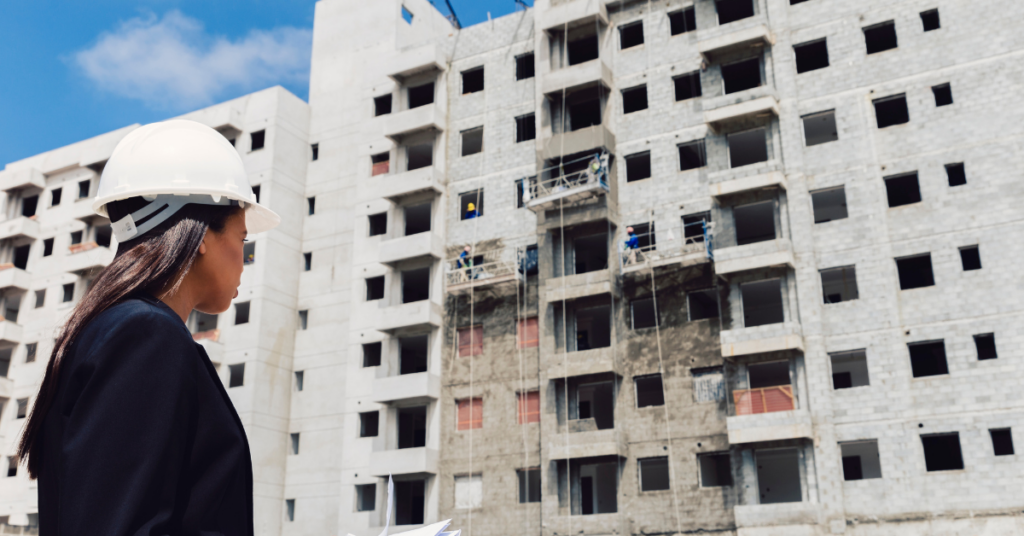
Using Aparna RMC enables:
- Greater design flexibility
- Reduced structural compromises
- Improved space utilisation
- Better finish quality
- Faster project execution
- Higher client satisfaction
These benefits help transform architectural vision into reality.
10. Checklist: Choosing Concrete for Design-Driven Projects
Before selecting concrete for architectural projects, ensure:
🔲 Consistent strength across pours
🔲 Customised mix designs
🔲 High-quality surface finish capability
🔲 Reliable workability control
🔲 Technical coordination support
🔲 Proven experience in complex projects
Aparna RMC meets all these criteria.
11. Conclusion
Architectural innovation depends on materials that offer both strength and flexibility. Ready -Mix Concrete enables architects to push boundaries by supporting longer spans, complex forms, and refined finishes with confidence. Through customised mix designs, high-performance concrete, and precise quality control, Aparna RMC empowers modern architecture without compromising safety or durability.
For projects that demand creativity, precision, and performance, Aparna RMC delivers concrete solutions that turn ambitious designs into enduring structures.
Choose Aparna RMC to build architecture without limits.
12. FAQs
Q1: Can concrete support complex architectural designs?
Yes. Engineered Ready-Mix Concrete enables complex forms and long spans reliably.
Q2: Does high-strength concrete affect design flexibility?
It enhances flexibility by allowing slimmer structural elements and open spaces.
Q3: Does Aparna RMC work with architects during planning?
Yes. Aparna provides technical support to align concrete performance with design intent.