
From Foundation to Finish: How Concrete Quality Shapes the Entire Building
March 31, 2026
1. Introduction
Every building tells a story — and that story begins long before walls rise or finishes are applied. The true performance of a structure is determined by one critical factor that runs from the ground up: concrete quality in construction. From foundations and columns to slabs and structural cores, concrete influences strength, durability, safety, and long-term maintenance.
While finishes may define aesthetics, it is concrete that defines how a building performs over decades. Poor-quality concrete can lead to cracks, seepage, corrosion, and frequent repairs, while high-quality concrete ensures structural stability and longevity. This is why modern projects rely on durable Ready Mix Concrete rather than inconsistent site-mixed solutions.
In this blog, we explore how concrete quality impacts every stage of a building’s lifecycle and how Aparna RMC delivers concrete solutions that support long-lasting buildings from foundation to finish.
2. Why Concrete Quality Matters Across the Entire Structure

Concrete is the backbone of structural systems. Its quality directly affects:
- Load-bearing capacity
- Crack resistance
- Durability and service life
- Safety and performance under stress
- Maintenance requirements
Using high-quality concrete from the start ensures the structure behaves as a single, integrated system rather than a collection of weak zones.
3. Foundation Stage: Where Concrete Quality Begins
a. Importance of Strong Foundations
Foundations transfer loads from the building to the soil. Any weakness here affects the entire structure.
High-quality concrete ensures:
- Uniform load distribution
- Resistance to soil moisture
- Long-term stability
Poor foundation concrete can result in settlement, cracking, and structural distress.
b. Role of Ready Mix Concrete in Foundations
Using durable Ready Mix Concrete ensures consistent strength, controlled setting time, and reduced permeability — all essential for foundation performance.
4. Columns, Beams, and Structural Framework
a. Structural Strength Depends on Concrete Consistency
Columns and beams carry vertical and horizontal loads. Variations in concrete quality can cause:
- Uneven stress distribution
- Micro-cracking
- Reduced load-bearing capacity
Consistent concrete quality in construction ensures uniform structural behaviour.
b. Bonding with Reinforcement
High-quality concrete forms strong bonds with steel reinforcement, improving structural integrity and resistance to corrosion.
5. Slabs and Floors: Performance Under Daily Use
Slabs experience constant live loads and movement.
Good concrete quality ensures:
- Crack resistance
- Smooth finishing
- Reduced deflection
- Long-term durability
Using structural strength concrete minimises surface damage and maintenance needs.
6. Concrete Quality and Durability Over Time
Durability determines how well a building withstands environmental exposure.
High-quality concrete offers:
- Low permeability
- Resistance to moisture ingress
- Protection against corrosion
- Reduced chemical attack
This directly supports long-lasting buildings with lower lifecycle costs.
7. How Ready Mix Concrete Improves Overall Building Quality
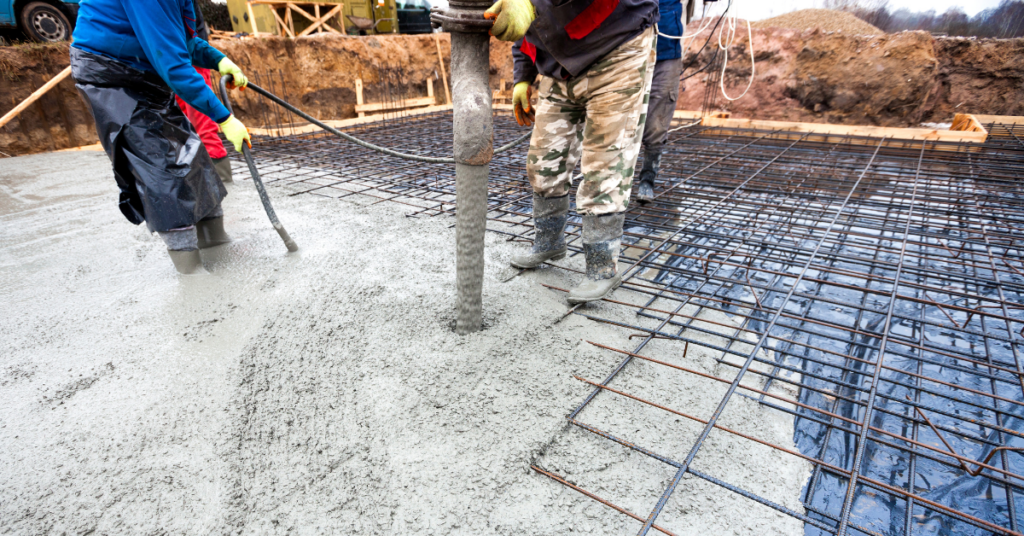
Ready Mix Concrete enhances building performance by offering:
- Accurate mix proportions
- Uniform strength across pours
- Controlled water–cement ratio
- Predictable setting behaviour
These factors make durable Ready Mix Concrete the preferred choice for modern construction.
8. How Aparna RMC Ensures Consistent Concrete Quality
a. Engineered Mix Designs
Aparna RMC develops mix designs based on structural requirements, exposure conditions, and durability needs.
b. Automated Batching and Quality Control
Automation ensures precise proportioning and consistency across every batch, strengthening concrete quality in construction.
c. Continuous Testing and Monitoring
Aparna conducts regular strength and workability tests to ensure performance standards are met.
d. Technical Support at Site
Technical guidance helps ensure concrete is placed, compacted, and cured correctly to maintain quality from plant to project.
9. Impact of Concrete Quality on Maintenance and Lifecycle Costs
Buildings constructed with high-quality concrete experience:
- Fewer cracks and defects
- Reduced water seepage
- Lower repair frequency
- Longer service life
This makes quality concrete a cost-effective investment rather than an expense.
10. Checklist: Ensuring Concrete Quality from Start to Finish
Before selecting a concrete supplier, ensure:
🔲 Consistent concrete quality across pours
🔲 Durable Ready Mix Concrete solutions
🔲 Automated batching and testing
🔲 Low-permeability mix options
🔲 Technical expertise and support
🔲 Proven experience across project types
Aparna RMC meets all these criteria.
11. Conclusion
Concrete quality is the foundation of every strong, safe, and durable building. From the first foundation pour to the final slab, the performance of concrete influences structural strength, durability, and long-term maintenance. By using durable Ready Mix Concrete with consistent quality and engineered precision, builders can ensure long-lasting buildings that perform reliably over time.
With its focus on automation, testing, and technical expertise, Aparna RMC delivers concrete solutions that shape building performance from foundation to finish.
Choose Aparna RMC for concrete quality that supports your structure at every stage.
12. FAQs
Q1: Why is concrete quality important in construction?
Because it affects structural strength, durability, and long-term maintenance.
Q2: How does Ready Mix Concrete improve building quality?
It provides consistent strength, accurate proportions, and reliable performance by reducing human errors, which results in higher strength, greater durability, and load-bearing capacity, and fewer cracks.
Q3: How does Aparna RMC ensure durable concrete?
Through engineered mix designs, automated batching, and continuous quality monitoring.