
What Happens Inside a Ready Mix Concrete Plant? A Step-by-Step Guide

January 27, 2026
1. Introduction
Ready Mix Concrete may look simple when it arrives at a construction site, but behind every cubic meter lies a highly controlled, technology-driven production process. Unlike site-mixed concrete, which depends on manual labour and variable conditions, Ready Mix Concrete is manufactured in specialised plants designed for accuracy, consistency, and efficiency.
Understanding what happens inside a Ready Mix Concrete plant helps builders, engineers, and developers appreciate why RMC offers superior quality, safety, and performance. Aparna RMC operates some of the most advanced batching plants in the region, ensuring that every batch meets strict quality and strength standards.
In this blog, we take you through a step-by-step journey inside an Aparna RMC plant, explaining how raw materials are transformed into high-performance concrete ready for modern construction.
2. Step 1: Raw Material Selection and Storage
Everything starts with high-quality raw materials. Aparna RMC follows strict guidelines for sourcing and storing materials.
Key materials used:
- Cement
- Coarse aggregates
- Fine aggregates (M-sand)
- Water
- Admixtures
Why this step matters:
Poor-quality raw materials directly reduce concrete strength and durability. Aparna ensures materials are sourced only from approved suppliers and stored in controlled conditions to prevent contamination.
3. Step 2: Raw Material Testing & Quality Verification
Before materials enter production, they undergo rigorous testing.
Tests conducted include:
- Cement fineness and setting time
- Aggregate grading and moisture content
- Sand cleanliness and particle size
- Water chemical purity
This step ensures that only certified materials are used, eliminating inconsistencies at the foundation level.
4. Step 3: Accurate Weighing Through SCADA Automation
Once approved, materials are fed into the batching system.
SCADA-controlled batching ensures:
- Precise measurement of cement, aggregates, and water
- Correct water–cement ratio
- Zero manual estimation
- Repeatable accuracy for every batch
Automation is one of the biggest advantages of Aparna RMC, ensuring uniform concrete quality across thousands of batches.
5. Step 4: Mixing Process
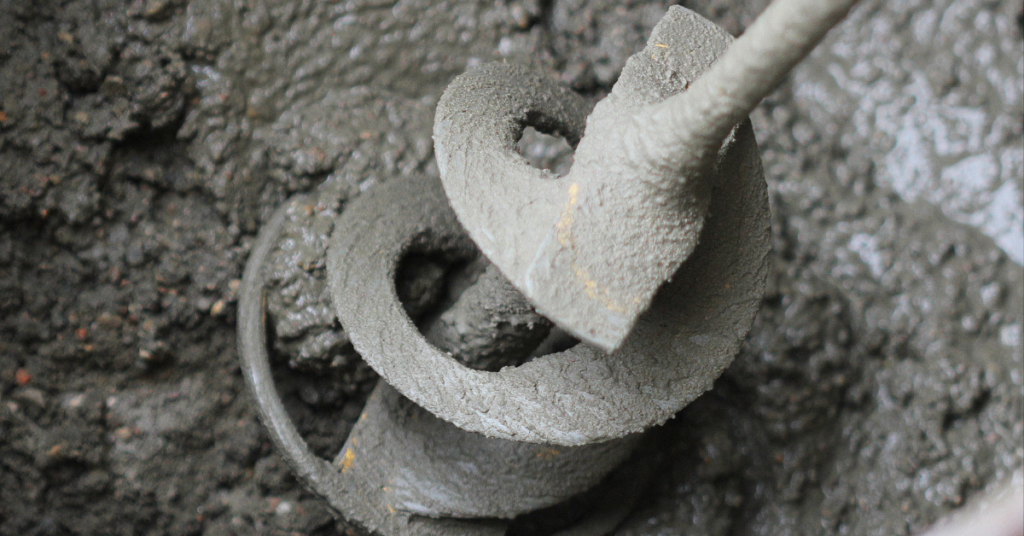
After weighing, materials are transferred to high-capacity mixers.
What happens during mixing:
- Cement coats aggregates evenly
- Water activates hydration
- Admixtures improve workability, strength, or setting time
Why controlled mixing is critical:
Improper mixing can lead to weak zones, segregation, or inconsistent strength. Aparna’s mixers ensure thorough blending within controlled time cycles.
6. Step 5: Fresh Concrete Quality Checks
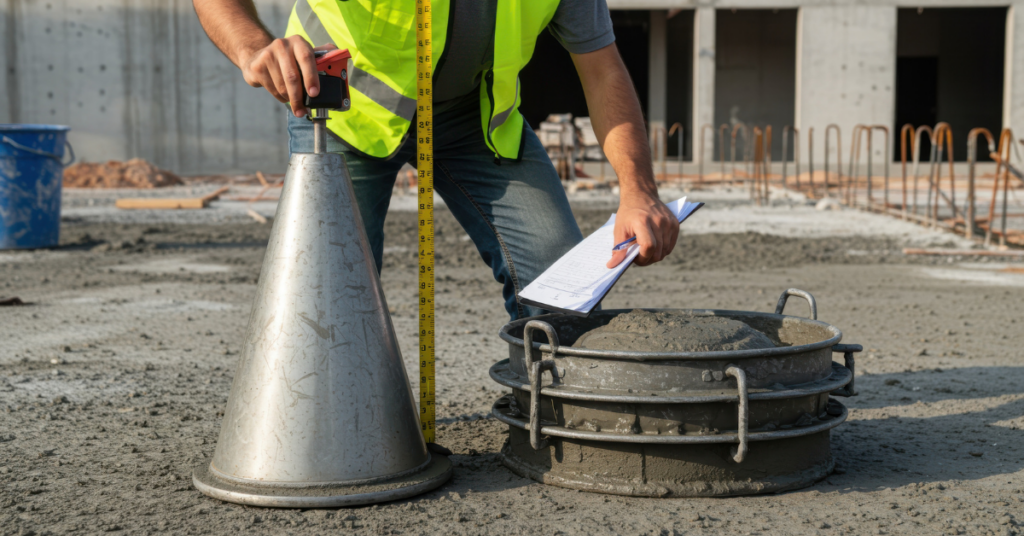
Before dispatch, fresh concrete is tested for consistency and workability.
Common checks include:
- Slump test
- Temperature monitoring
- Visual inspection
These checks confirm that concrete can be placed and compacted correctly at the site.
7. Step 6: Dispatch Planning and Scheduling
Concrete has a limited working time, making dispatch planning crucial.
Aparna RMC ensures:
- Accurate scheduling based on site demand
- Continuous supply for large pours
- Coordination with site engineers
- Optimised delivery routes
Each delivery is planned to minimise waiting time and maintain concrete quality.
8. Step 7: Loading into Transit Mixers
Once approved, concrete is loaded into transit mixers.
Why transit mixers matter:
- Continuous drum rotation prevents segregation
- Maintains uniform consistency during travel
- Protects concrete from setting prematurely
Aparna’s well-maintained fleet ensures smooth transportation from plant to site.
9. Step 8: GPS Tracking and Delivery Monitoring
Aparna RMC uses GPS-enabled vehicles to track deliveries in real time.
Benefits of GPS tracking:
- Live location updates
- Better coordination with site teams
- Route optimisation
- Reduced delivery delays
This level of visibility ensures concrete arrives fresh and on time.
10. Step 9: Site-Level Support and Pour Coordination
Aparna’s responsibility doesn’t end at dispatch.
On-site support includes:
- Technical guidance during pouring
- Pump coordination
- Workability adjustments if required
- Quality checks at “the” site
This hands-on approach ensures concrete performs as intended.
11. Step 10: Strength Testing & Documentation
After placement, concrete cubes are tested at:
- 7 days
- 14 days
- 28 days
These tests verify that the concrete achieves the required strength grade.
Why documentation matters:
Test records provide proof of quality and compliance with IS/BIS standards.
12. How Aparna RMC Maintains Consistency Across All Plants
With multiple plants in operation, Aparna ensures uniform standards through:
- Centralised quality protocols
- Standardised mix designs
- Regular audits
- Skilled technical teams
- Continuous system calibration
This ensures consistency regardless of location.
13. Why This Process Makes RMC Superior to Site-Mixed Concrete
Compared to site mixing, RMC offers:
- Controlled production environment
- Accurate proportioning
- Reliable strength
- Faster construction
- Reduced wastage
- Improved structural safety
Aparna’s step-by-step controlled process eliminates guesswork from concrete production.
14. Checklist: What a High-Quality RMC Plant Must Have
Before choosing an RMC supplier, ensure the plant has:
🔲 Automated batching systems
🔲 Raw material testing facilities
🔲 Slump and strength testing protocols
🔲 GPS-enabled fleet
🔲 Dispatch planning team
🔲 On-site technical support
Aparna RMC meets all these criteria.
15. Conclusion
A Ready Mix Concrete plant is a hub of precision, technology, and quality control. From raw material testing to automated batching, controlled mixing, and real-time delivery monitoring, every step plays a critical role in ensuring concrete performance. Aparna RMC’s systematic and transparent production process guarantees consistency, strength, and durability in every batch delivered.
By understanding what happens inside an RMC plant, builders can make informed choices and trust Aparna RMC as a reliable partner for safe, efficient, and high-quality construction.
Choose Aparna RMC — engineered precision from plant to project.
16. FAQs
Q1: How is RMC different from site-mixed concrete?
RMC is produced in controlled plants using automation and testing, ensuring higher consistency.
Q2: Does Aparna RMC test every batch?
Yes. Slump tests and strength testing are part of Aparna’s standard quality process.
Q3: How does Aparna ensure fresh concrete delivery?
Through optimised dispatch planning, GPS tracking, and nearby batching plants.