
What Happens When Concrete Fails? Real Site Mistakes That Cost Crores
May 14, 2026
1. Introduction
Concrete failure doesn’t announce itself. It shows up weeks later — a crack snaking through a load-bearing column, a slab that buckles under weight, a structure that fails its cube test three floors too late. And by then, the cost isn’t just about replacing material. It’s demolition, rework, delay penalties, and in serious cases, legal liability that follows a contractor for years.
Here’s the part nobody wants to say out loud: most of these failures were avoidable. They trace back to decisions made before the first pour ever started. Understanding where those decisions go wrong — and what they end up costing — is the first step to making sure your project doesn’t become one of these statistics.
This blog walks through the five most common concrete failure points on Indian construction sites, what they actually cost when things go wrong, and how sourcing ready mix concrete from a properly quality-controlled plant takes most of these risks off the table before they even begin.
2. Why Concrete Fails: It Starts Before the Mix Arrives
When something goes wrong with concrete, the instinct is to blame the material — to assume the batch was bad or the supplier cut corners. In reality, it’s almost always a process failure. Poor specification, incorrect water-cement ratios, delayed placement, skipped curing, and no quality testing account for the overwhelming majority of structural concrete failures you’ll find on Indian construction sites.
The material is rarely the villain. The decisions around it are. India’s construction sector loses thousands of crores every year to structural rework — and a significant chunk of that is entirely preventable.
3. Mistake 1: Specifying the Wrong Concrete Grade
This is the most expensive mistake in Indian construction, and it happens more often than most people in the industry want to admit.
Every structural element has a minimum concrete grade requirement. Your structural engineer specifies it in the drawings — M20 for a residential slab, M25 for beams and columns in a commercial building, M30 and above for bridges, flyovers, and high-load infrastructure. Those numbers represent the minimum compressive strength that the element needs to safely carry its loads across the entire life of the structure.
When a contractor substitutes M20 concrete for a column specified at M25, the difference — 20 MPa versus 25 MPa — looks small on paper. In a multi-storey structure, it isn’t. Columns carry cumulative load. Every floor added above multiplies the stress on the columns below. A grade shortfall in the lower floors of a high-rise doesn’t fail immediately. It shows up years later through slow cracking, surface spalling, or a structural audit that forces expensive remediation while the building is fully occupied.
Remediation costs on a mid-size residential project for a single incorrectly graded floor can run ₹15–25 lakh before penalty clauses are even factored in. Matching the concrete grade to the structural specification isn’t a preference — it’s the foundation of everything else. Aparna RMC supplies ready mix concrete from M30 to M80, with every batch produced to the exact grade specified.
4. Mistake 2: Altering the Water-Cement Ratio on Site
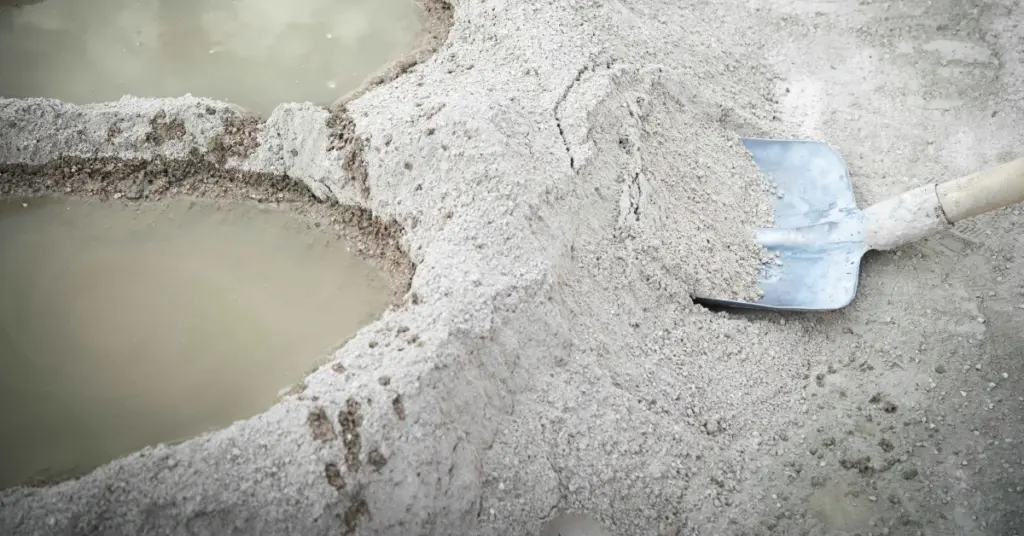
Ifwrong grade specification is the most expensive mistake, incorrect water addition is the most common. Concrete stiffens during transit — especially in Indian summer temperatures that push past 40°C. When the transit mixer arrives, and the mix has started to lose workability, the instinct is to add water. It restores slump, makes the concrete easier to place, and saves time. It also fundamentally compromises the structural outcome.
The water-cement ratio is the most critical variable in concrete mix design. Every litre of water added beyond the designed ratio dilutes the cement paste, increases porosity, and reduces the final compressive strength of the hardened concrete. A mix batched for M25 strength, watered down at the pour point, may cure at M20 or below — invisible to the eye, undetectable without testing, sitting in the structure until something exposes it.
In a ready-mix concrete plant, the water-cement ratio is set during mix design and controlled through automated batching. What leaves the plant is what the structure receives. There’s no on-site variable left to introduce.
5. Mistake 3: Transit Delays and Placement Timing
Ready-mix concrete has a working window from the moment batching is complete. Under standard conditions, that window is around 90 minutes. In the Indian summer, it shrinks significantly.
When concrete sits in transit longer than it should, one of two things happens. Either the mix stiffens past placeable consistency, leading to inadequate compaction and air voids. Or water gets added to restore workability — taking you straight back to Mistake 2.
The most visible consequence is honeycombing — those pockets and surface voids that appear on columns and walls when formwork comes off. It looks cosmetic. It isn’t. It indicates incomplete compaction and compromised load-bearing capacity. Proximity to an RMC plant isn’t a convenience factor — it’s a structural quality factor. Aparna RMC’s wide network across five states is built around exactly this principle.
6. Mistake 4: Skipping or Shortcutting Curing
Concrete doesn’t dry — it cures. This is one of the most misunderstood aspects of construction on Indian sites, and the consequences of confusing the two are serious.
Curing is the ongoing chemical reaction between cement and water — hydration — that builds compressive strength over time. When freshly poured concrete is left exposed to direct sun and dry air without protective measures, surface moisture evaporates faster than the interior can replace it. The result is a thermal and moisture gradient through the slab depth — surface cracking, reduced hardness, and long-term durability loss that only shows up later.
Minimum curing practice means keeping the concrete surface continuously moist for at least seven days. For mass concrete pours — raft foundations, thick bridge decks — temperature control concrete formulated to manage internal heat build-up is the right specification. Skipping curing doesn’t show up on the day. It shows up at the 28-day cube test, or years later, when the structure starts deteriorating from the surface inward.
7. Mistake 5: No Quality Testing at Any Stage
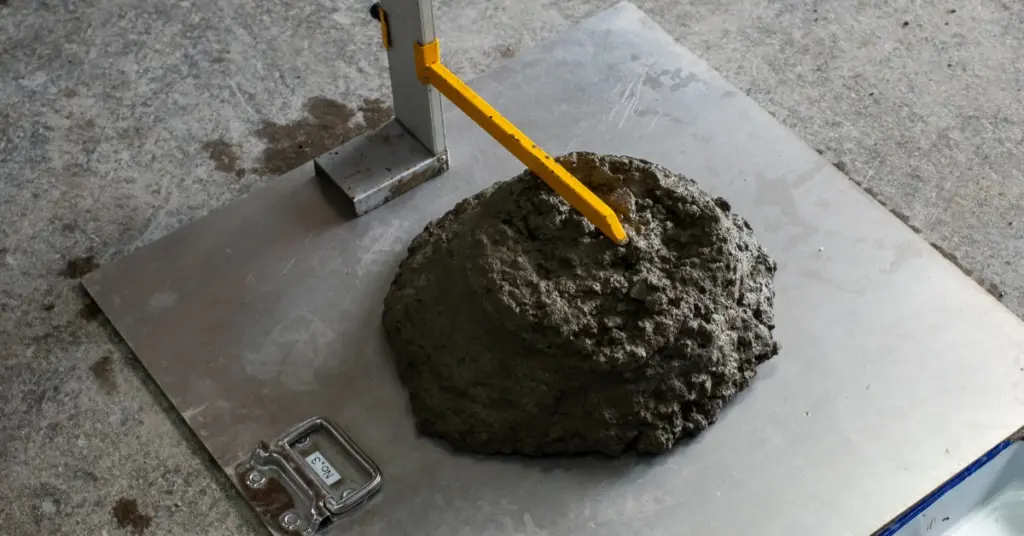
This is simultaneously the most avoidable and the most frequently skipped step on smaller Indian construction projects. Contractors managing individual house builds or tight commercial timelines often skip cube testing entirely — because it adds time and cost. What it removes is the only objective confirmation that the concrete poured into your structure actually meets the grade you specified.
IS 456 — India’s standard code for reinforced concrete — requires compressive strength testing at both 7 days and 28 days for all structural concrete. If the 7-day results are low, you know before the next floor goes up. If you skip testing, you find out during a structural audit with three more floors sitting above the problem.
Aparna RMC supplies concrete with full batch documentation and plant-level quality testing before dispatch. Every load is produced under ISO 9001:2015-certified processes and tested against grade specification before it leaves the plant.
8. What Concrete Failure Actually Costs
To frame this in real terms, a failed ground-floor slab on a mid-size residential project in Hyderabad means breaking out and disposing of the failed concrete, re-shuttering, re-ordering, re-pouring, and re-curing. Direct material and labour cost on a 2,000 sq ft floor: ₹10–18 lakh. Add contractual delay penalties, subcontractor idle time, and the cascading effect on every trade scheduled above that floor — and the total exposure on a single failure easily crosses ₹25–40 lakh.
None of this is unusual. It happens on Indian construction sites regularly, across every project scale. And in almost every documented case, the cause is one of the five mistakes above — wrong grade, altered water ratio, delayed placement, skipped curing, or absent testing. Fix all five, and concrete failure becomes the exception rather than the routine.
9. The Highest-Impact Decision You Can Make
The single change that takes the most risk off the table in one move is sourcing from a ready mix concrete supplier with documented, certified quality controls — rather than batching on site or sourcing from an unverified plant. When the concrete mix design is fixed and documented, the water-cement ratio is controlled at the plant, transit logistics are managed, and every batch is tested before it leaves — most of the structural failure risk disappears before the truck even reaches your site.
10. Before Your Next Pour — Checklist
● Confirm the concrete grade matches the structural drawings for every element
● Brief the pour crew: no water additions to the mix on site under any circumstances
● Verify transit time from plant to site stays within the working window
● Assign responsibility for cube sampling at the point of pour
● Plan curing schedule before the first load arrives — not after
● Request batch certificates from your ready-mix concrete supplier for every load
11. Conclusion
Concrete failure isn’t bad luck. It’s the predictable outcome of skipping steps that exist for structural reasons. Every one of the five mistakes above is preventable — with the right specification, the right supplier, and the right site practices. Aparna RMC delivers ready mix concrete with SCADA-controlled batching, batch-certified quality, and technical support across its plants in five states, so the variables that cause failure are managed at the source, not left to chance on your site.
Planning your next pour? Talk to Aparna RMC before you specify. Get a quote at aparnarmc.com/get-quote or use the RMC Calculator at aparnarmc.com/rmc-calculator to estimate your requirement today.
12. FAQs
Q1: What is the most common cause of concrete failure on Indian construction sites?
More often than not, it comes down to the water-cement ratio. Water added on site to restore workability reduces compressive strength and can quietly drop a pour below its specified grade — with no visible sign until cube testing or, worse, structural failure. It’s one of those things that’s easy to prevent once you know the risk.
Q2: How do I know if the ready-mix concrete delivered to my site is the grade I ordered?
Request a batch certificate with every delivery and run on-site slump testing and cube sampling at the point of pour. A reliable RMC supplier will provide batch documentation as a matter of standard practice — if they don’t, that’s worth noting.
Q3: Can a cold joint in a slab be repaired after the fact?
Cold joints can be treated with bonding agents and patch repairs, but these methods don’t restore the monolithic strength of a continuous pour. Prevention — maintaining delivery cadence and avoiding mid-pour gaps — is the only approach that actually works.
Q4: How long does concrete need to cure before the next floor can proceed?
Under IS 456, formwork on structural slabs should not be struck before 14 days, and the structure should reach at least 75% of its 28-day design strength before the next floor is loaded. Always confirm stripping times with your structural engineer based on the specific grade and span.