
Top 7 Factors That Affect Concrete Strength on Construction Sites

July 1, 2026
Walk past any construction site and concrete is everywhere being poured, set, cured, and built upon. It holds up walls, carries floor loads, anchors columns, and forms the very skeleton of a structure. Yet, for something so universally used, concrete is surprisingly misunderstood when it comes to what actually determines its strength.
The truth is, concrete doesn’t just gain strength because you mix cement with water and aggregate. Dozens of variables influence how strong a concrete element will ultimately be, and getting even a handful of them wrong can result in cracking, spalling, structural failure, or costly rework years down the line.
Whether you’re a site engineer, a project manager, or a homeowner building your dream home, understanding what governs concrete strength is not a technical luxury, it’s a practical necessity. Here are the seven most critical factors that determine concrete strength on real construction sites, and what you can do to get each one right.
1. Water-Cement Ratio: The Single Biggest Variable in Concrete Strength
If there is one number that matters more than any other in concrete performance, it’s the water-cement ratio, the ratio of water to cement by weight in the mix. The relationship is simple and unforgiving: the higher the water-cement ratio, the lower the compressive strength.
Water is needed to trigger cement hydration. But excess water beyond what’s chemically needed creates capillary pores within the concrete as it dries. These pores reduce density, increase permeability, and dramatically lower strength. A mix with a water-cement ratio of 0.40 will produce a significantly stronger concrete than one with a ratio of 0.60, using the same materials.
This is why the concrete mix ratio is so carefully calculated in any professional mix design. For structural elements like columns and slabs, exceeding the design water-cement ratio, even by adding a few extra litres on-site to improve workability, is one of the most common and most damaging mistakes in field concreting.
Ready mix concrete manufactured at a calibrated batching plant, such as an Aparna RMC plant, eliminates this guesswork. Every batch is produced with a precisely controlled water-cement ratio as part of the concrete mix design, ensuring that no unauthorised water additions creep into the process.
2. Concrete Mix Design and Mix Proportions
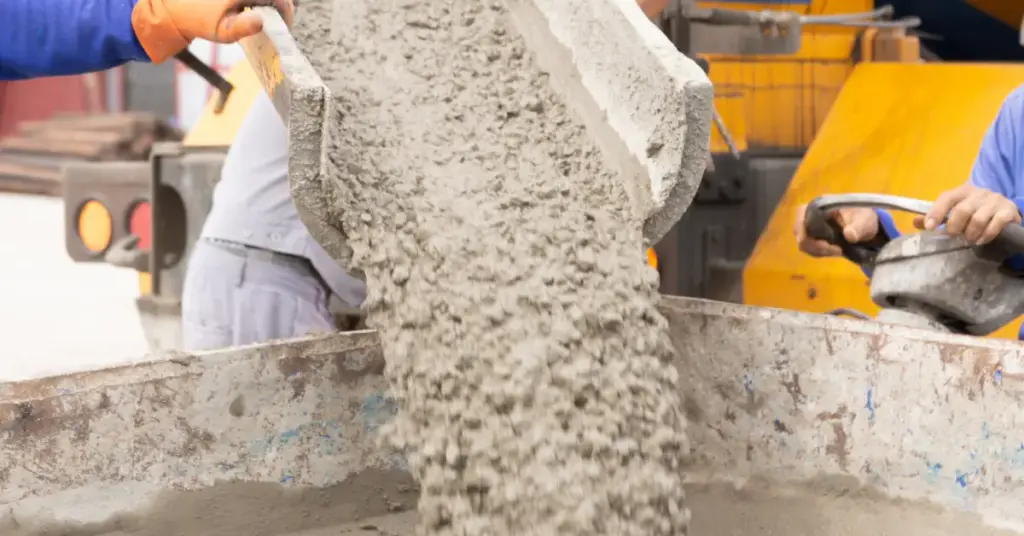
Behind every high-performing concrete is a carefully crafted concrete mix design, a recipe that determines the proportion of cement, fine aggregate, coarse aggregate, water, and admixtures to achieve a target strength, workability, and durability.
Getting the mix proportion of concrete right is both a science and a site discipline. Too much fine aggregate makes the mix sticky and prone to shrinkage cracking. Too little cement reduces binding capacity. Incorrect aggregate sizes affect packing density and void content. Each ingredient has a role, and each proportion matters.
Different structural elements call for different designs. The M10 concrete ratio, used mostly for lean concrete and non-structural fills, is very different from the M25 concrete mix ratio used for beams and slabs, or the M30 ready mix concrete grade used in high-rise structures and bridges. Using a lower grade where a higher one is specified, either due to cost-cutting or lack of awareness, is a mistake that compromises safety at its core.
A professionally prepared concrete mix design, validated through lab trials and adjusted for site-specific conditions, is what separates durable concrete from concrete that merely looks good for the first few years.
3. Quality and Gradation of Aggregates
Aggregates make up nearly 70–75% of the total volume of concrete. Despite this, they’re often treated as the “filler” component, procured from any available source with little attention to quality, gradation, or cleanliness.
That’s a serious oversight. The strength, durability, and workability of concrete are directly influenced by the type, size distribution, and surface texture of both coarse and fine aggregates. Aggregates that are dirty, contain excessive silt or clay, are poorly graded, or have weak internal structure contribute to a weaker final product, regardless of how good the cement or the mix design is.
Well-graded aggregates, meaning a good distribution of particle sizes, pack more densely, reduce void content, and improve the bond between aggregate and cement paste. Aggregates with rough, angular surfaces provide better mechanical interlocking, improving tensile and shear performance.
At an Aparna RMC batching plant, aggregates are sourced, tested, and graded before use. Moisture content in aggregates is measured and accounted for in each batch so that the effective water-cement ratio remains consistent. This level of control is very difficult to replicate on a conventional site-mix setup.
4. Cement Type, Quality, and Freshness
Cement is the binding agent in concrete, and its quality sets the ceiling on what concrete can achieve. Not all cement is equal, and even good cement can underperform if it’s not stored or used correctly.
Different types of cement have different strength development curves. Ordinary Portland Cement (OPC) gains strength relatively quickly and is the most common choice for general construction. Blended cements like PPC (Portland Pozzolana Cement) gain strength more gradually but often produce denser, more durable concrete in the long run, making them better suited for certain environmental exposures.
Cement that has been stored too long or exposed to humidity begins to undergo pre-hydration, reducing its reactive capacity. Using partially hydrated cement in a structural pour is like using a battery that’s already half-drained. The mix may appear normal, but the maximum achievable strength is already compromised.
For ready mix concrete suppliers operating at scale, cement quality is monitored rigorously, lot-tested, stored in silos under dry conditions, and used within acceptable timelines. This is one of the underrated advantages of sourcing RMC concrete from a certified plant over mixing on-site from bags stored in open conditions.
5. Compaction and Placement Practices
Concrete can be perfectly designed and batched, and still end up weak if it’s not placed and compacted correctly. Entrapped air is concrete’s enemy. Every percentage point of air void left in hardened concrete can reduce compressive strength by roughly 5%.
Poor compaction leads to honeycombing, visible voids or cavities in the concrete surface, as well as internal voids that are invisible but structurally dangerous. Concrete that isn’t adequately vibrated after placement will have weak zones, especially around reinforcement bars, where bond strength is critical.
On the flip side, over-vibration causes segregation, heavier aggregates settle to the bottom and water rises to the top, creating layered zones of non-uniform strength. The key is methodical vibration with proper equipment, at the right frequency, inserted at regular intervals and withdrawn slowly.
Concrete placement during adverse conditions, rain, extreme heat, or when concrete has partially stiffened during transit, also compromises compaction. This is why delivery time and slump consistency are taken seriously by professional RMC suppliers. Aparna RMC’s delivery system is designed to minimise transit time and maintain workability so that concrete is placed in its optimal condition.
6. Curing Conditions and Duration
Of all the factors on this list, curing is perhaps the most consistently neglected on Indian construction sites. Once concrete is poured and the formwork looks solid, there’s a tendency to move on, assuming the hard work is done. It isn’t.
Curing is the process of maintaining adequate moisture and temperature in freshly placed concrete so that cement hydration continues to completion. Concrete doesn’t dry to gain strength, it chemically reacts. Stop that reaction too early, and you freeze the strength development well short of the design target.
Concrete gains roughly 70% of its 28-day strength in the first 7 days, but only if cured properly. Beyond 7 days, continued curing keeps adding strength. Concrete that is left exposed and uncured can lose 30–40% of its potential strength depending on ambient conditions.
For M20 grade concrete and above, a minimum curing period of 7 days using water or wet hessian is standard. For blended cements and higher-grade mixes, 14 days is more appropriate. Curing compounds can be used where water curing is impractical, but they must be applied immediately after the surface sets.
7. Concrete Grade Selection for the Right Application
This might sound obvious, but selecting the wrong concrete grade for the application is far more common than the construction industry would like to admit, and it has a direct, measurable impact on structural strength.
Every structural element has a design requirement, a minimum concrete grade that the engineer has specified based on the loads the element must carry, the exposure conditions it will face, and the safety margins required. Using M15 or M20 where M25 has been specified doesn’t just reduce strength, it changes the fundamental safety assumptions of the structure.
Understanding the difference between grades matters practically. M10 concrete ratio mixes are suitable for blinding layers and non-structural fills. M20 grade concrete is the minimum for reinforced structural elements in most residential buildings. M25 concrete mix ratio is used for beams, columns, and slabs in mid-rise construction. M30 ready mix concrete is used for high-load, high-rise, or exposure-critical applications.
Choosing the right grade also depends on environmental factors, concrete exposed to moisture, sulphates, or aggressive soils needs higher grades and lower permeability. This is where a ready mix concrete supplier with technical expertise adds real value. Aparna RMC’s team helps clients choose the right grade and mix design based on their specific structural and environmental requirements, not just the most economical option.
Why Ready Mix Concrete Is the Smarter Choice for Strength-Critical Pours
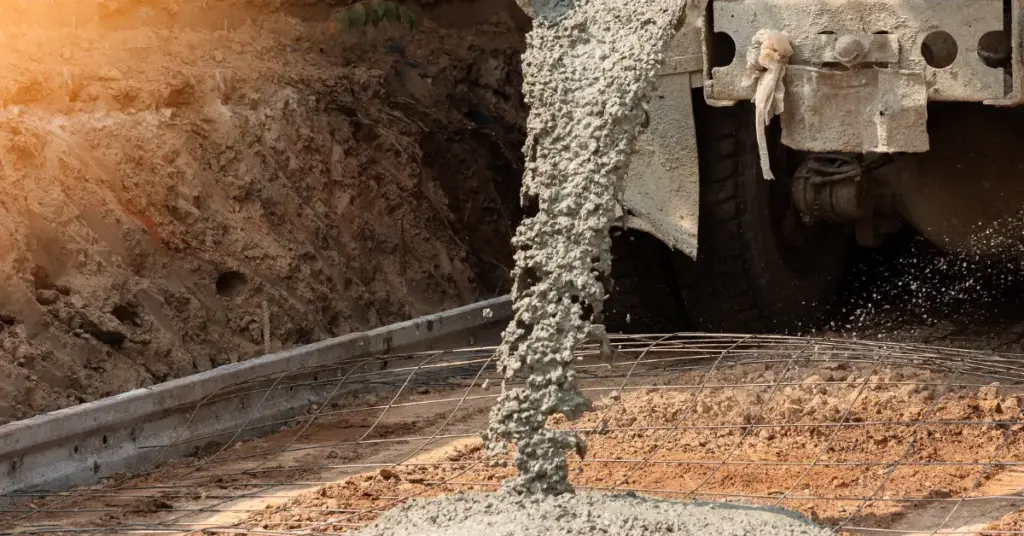
When you look at all seven factors above, a pattern becomes clear, controlling them consistently on a conventional site-mix setup is genuinely difficult. It requires precise weighing, lab-tested materials, calibrated mixing equipment, trained labour and constant quality supervision.
Ready mix concrete addresses most of these variables at source. When you order RMC from a certified plant:
The concrete mix design is prepared in a laboratory and validated before production begins. Aggregates are tested and adjusted for moisture content before batching. The water-cement ratio is maintained within tight tolerances using calibrated batching systems. Every batch is tested for slump, temperature, and air content before dispatch. Delivery is timed to minimise slump loss and ensure workability at the pour point.
Aparna RMC has spent 19 years refining this process across 36 plants in five Indian states. With ISO certification, state-of-the-art batching plants, and a commitment to consistent quality, Aparna RMC is one of the most trusted ready mix concrete manufacturers and suppliers across Hyderabad, Chennai, and beyond. Whether you need M20, M25, or M30 ready mix concrete, every batch that leaves an Aparna RMC plant is built on the science of strength, not chance.
You can also use the Aparna RMC calculator on their website to estimate your concrete volume requirement before placing an order, making it easier to plan your pour and avoid material wastage.
Wrapping Up
Concrete strength is never accidental, it is the result of deliberate decisions made at every stage, from mix design to curing. The seven factors covered in this blog are not abstract engineering concepts. They play out on every construction site, every day, and the quality of decisions made around them determines whether a structure performs safely for 50 years or starts showing distress in five.
If you’re serious about structural integrity, start with the right concrete, designed, batched, and delivered with precision. That’s the foundation of everything else.
FAQ: Concrete Strength on Construction Sites
Q1. What is the most important factor affecting concrete strength?
The water-cement ratio is widely regarded as the single most influential factor. Even small, unplanned additions of water on-site can significantly reduce compressive strength and increase porosity.
Q2. What is the difference between M20 and M25 concrete mix ratio?
M20 grade concrete has a characteristic compressive strength of 20 N/mm² and is used for general structural work in residential buildings. M25 concrete mix ratio produces a stronger mix with 25 N/mm² strength, suitable for columns, beams, and slabs in larger or more demanding structures.
Q3. How does poor curing reduce concrete strength?
When curing is inadequate or stopped too early, the cement hydration process is interrupted. This means the chemical bonds that give concrete its strength never fully form, resulting in concrete that can lose 30–40% of its intended design strength.
Q4. Is ready mix concrete stronger than site-mixed concrete?
Not inherently, but consistently so. Ready mix concrete is batched using controlled, calibrated systems that replicate the same mix design every time. Site-mixed concrete is vulnerable to human error, variable material quality, and inconsistent proportioning, all of which can reduce final strength unpredictably.
Q5. How do I know which concrete grade is right for my project?
Your structural engineer will specify the concrete grade in the design drawings. For common residential construction, M20 or M25 is typical. For high-rise, commercial, or exposure-critical applications, M30 or above may be required. A knowledgeable RMC supplier can also guide you based on your project type and location.
Q6. Where can I find ready mix concrete near me in Hyderabad?
Aparna RMC operates multiple RMC plants in Hyderabad and surrounding areas. You can visit aparnarmc.com to locate your nearest RMC plant, use the RMC calculator to estimate volumes, and get in touch with their team for customised mix design support.