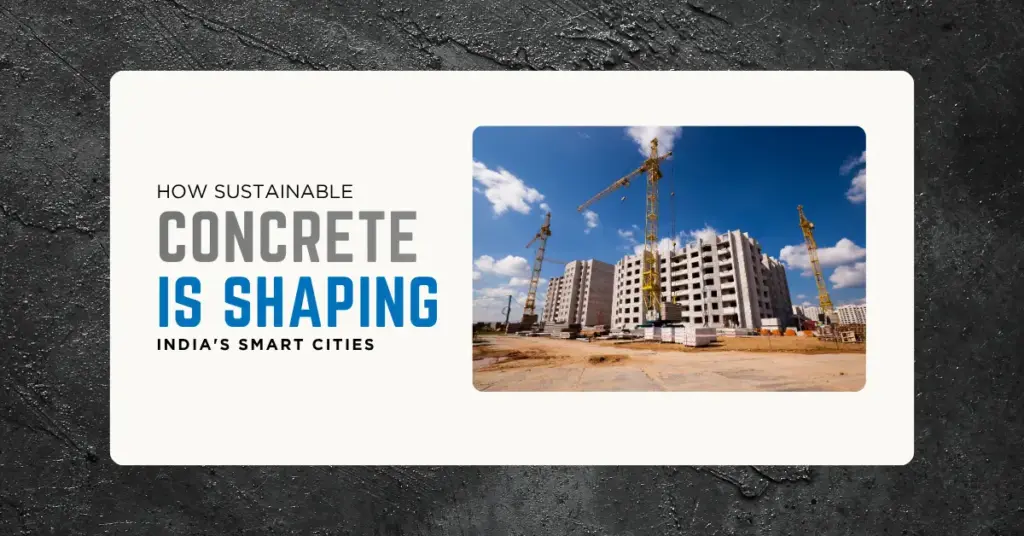
How Sustainable Concrete Is Shaping India’s Smart Cities
June 16, 2026
India is building at a pace the world is watching. From metro rail corridors slicing through city skylines to pedestrian-friendly town centres being planned from scratch, the country’s smart city mission has moved far beyond vision boards and government presentations. It is now concrete, quite literally.
But the concrete going into India’s smart cities today is not the same material that built the infrastructure of the 1980s and 1990s. It is engineered, leaner, and increasingly sustainable. And that shift is not cosmetic. It reflects a fundamental rethinking of how India wants to build, not just fast, but responsibly, with an eye on the decades ahead.
This blog explores how sustainable concrete is becoming the backbone of India’s smart urban future, what it means in practical terms for builders and developers, and why choices made at the concrete mix design stage can define whether a city is truly smart or just smart-looking.
What Does “Sustainable Concrete” Actually Mean?
Before anything else, it’s worth clearing up a misconception. Sustainable concrete is not a single product or a niche material reserved for green-certified luxury projects. It is a broad category that covers several innovations in how concrete is formulated, produced, delivered, and used.
At its core, sustainable concrete aims to reduce environmental impact without compromising structural performance. This can happen in several ways, by replacing a portion of cement with industrial by-products like fly ash or GGBS (ground granulated blast furnace slag), by reducing material waste through precise batching, by designing mixes that last longer and require less repair, or by incorporating alternative materials that reduce the overall carbon footprint of construction.
The concrete mix design plays a central role here. When engineers specify the right mix proportion of concrete, factoring in strength grade, durability requirements, and environmental exposure, they are already making a sustainability decision. A well-designed mix uses no more material than is needed. That precision is sustainability in action.
The Smart City Challenge: Why Concrete Choices Matter More Than Ever
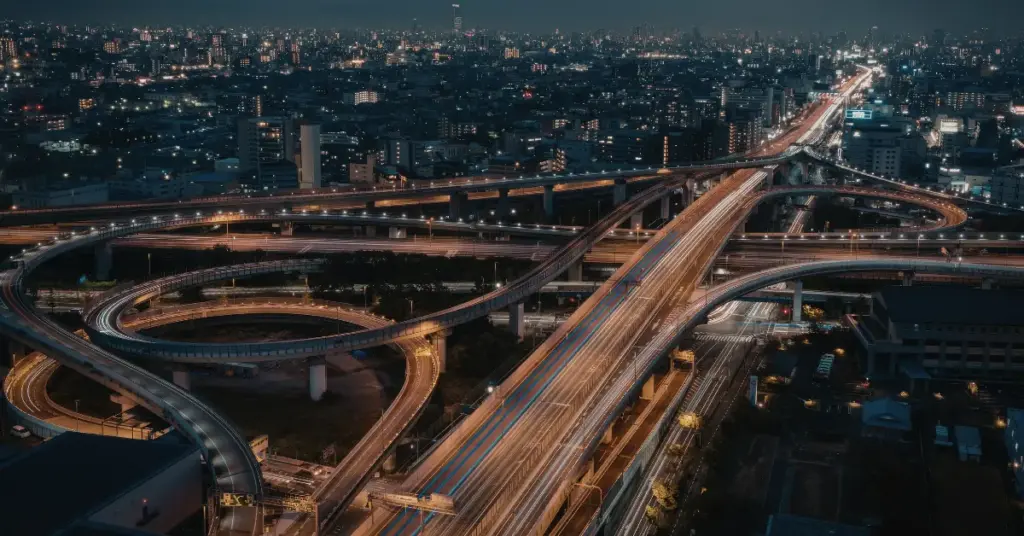
India’s Smart Cities Mission, launched in 2015, targets the development of 100 cities with world-class infrastructure, efficient public services, and sustainable urban environments. The built environment is at the heart of this, roads, flyovers, drainage systems, public buildings, transit hubs, and housing.
All of it needs concrete. Enormous quantities of it.
The challenge is that traditional concrete production is resource-intensive. Cement manufacturing alone accounts for roughly 7–8% of global CO₂ emissions. As India accelerates urban construction, using the same old approach to concrete production would contradict the very goals that smart cities are meant to achieve, cleaner air, lower emissions, more livable environments.
This is where sustainable concrete steps in as both a technical and ethical solution.
How Ready Mix Concrete Supports Sustainable Urban Infrastructure
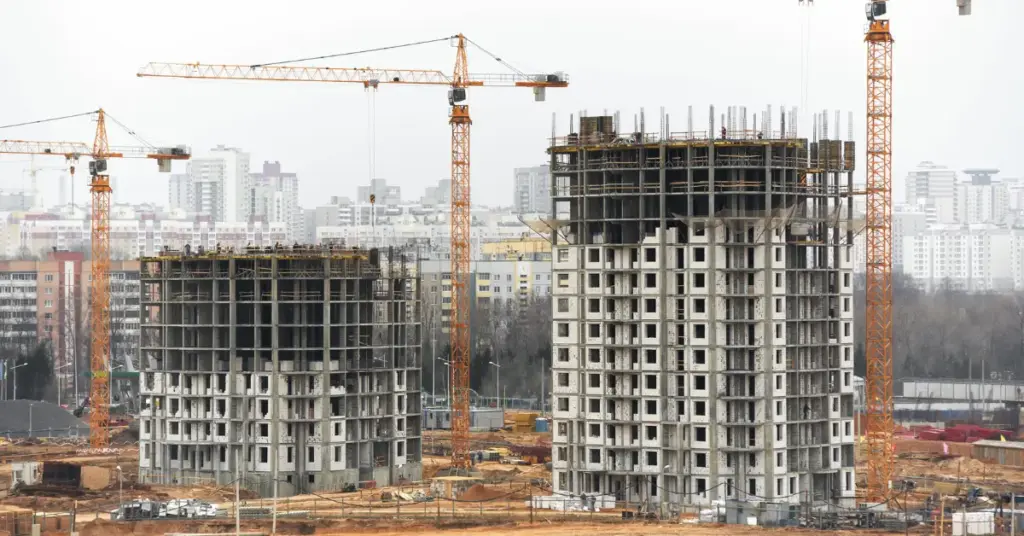
One of the most impactful changes India’s construction sector can make, and is making, is the widespread adoption of ready mix concrete over site-mixed concrete. The sustainability credentials of RMC concrete go well beyond convenience.
- Precision batching reduces waste:
At a modern RMC plant, every ingredient is weighed and batched by computer-controlled systems. There is no guesswork in the mix proportion of concrete, no over-ordering of cement to compensate for inconsistency, and no excess material discarded at the end of a pour. For large-scale smart city infrastructure projects, this precision translates into significant material savings over the project lifecycle.
- Controlled quality means longer-lasting structures:
Sustainable construction is not just about what goes in, it’s about how long it lasts. Ready mix concrete, because it is produced under controlled laboratory and plant conditions, consistently achieves the target strength for every grade, from M10 concrete ratio applications in non-structural fill to M25 concrete mix ratio and M30 ready mix concrete used in high-rise frames and bridge decks. Structures that meet their design life don’t need early repair or replacement. That is sustainability measured in decades, not just carbon points.
- Reduced on-site emissions:
Site-mixed concrete requires diesel-powered mixers running for extended periods on-site, contributing to localised air pollution. Centralised RMC plants, especially those investing in cleaner energy, consolidate that emission burden and are better positioned to manage and reduce it.
- Reduces the High Carbon Footprint of Construction
The construction sector is a major contributor to global carbon emissions, largely due to the production of cement. Ready Mix Concrete helps reduce this environmental impact through precise batching, optimized mix designs, and the use of supplementary cementitious materials such as fly ash and GGBS. By minimizing material wastage and reducing cement consumption without compromising performance, RMC supports the development of more sustainable and lower-carbon construction projects.
- Supports Flood Mitigation
As cities face increasing rainfall intensity and climate-related challenges, resilient infrastructure has become essential. Ready Mix Concrete plays a key role in the construction of stormwater drains, culverts, retaining walls, flood channels, and other water-management structures that help control and redirect excess water. Its consistent quality, strength, and durability ensure these critical systems perform reliably over time, helping urban areas better manage flooding and protect communities from water-related damage.
Lightweight Concrete: Doing More With Less
One of the most exciting developments in sustainable urban construction is the growing use of lightweight concrete. In smart city projects, where multi-level parking structures, elevated walkways, transit-oriented developments, and prefabricated building panels are common, reducing dead load is a real structural and economic advantage.
Lightweight concrete achieves lower density, typically between 300 to 1850 kg/m³ compared to the 2400 kg/m³ of standard concrete, by replacing conventional coarse aggregate with lightweight alternatives such as expanded clay, sintered fly ash aggregates, or foamed cellular structures. The result is a concrete that places less load on structural frames, allows for larger spans with less material in beams and columns, and often provides better thermal and acoustic insulation.
For smart cities prioritising energy efficiency in buildings, the thermal performance of lightweight concrete is a genuine value-add. Walls and roof elements that naturally moderate temperature reduce the HVAC load on buildings, contributing to long-term energy savings without additional systems or technology.
Glass Fiber Reinforced Concrete: Aesthetic Meets Performance
India’s smart cities are not just being built for function, they are being designed for experience. Public plazas, transit stations, civic buildings, and urban art installations are part of the smart city vision. And one material that bridges the gap between architectural ambition and structural practicality is glass fiber reinforced concrete (GFRC).
Glass fiber reinforced concrete incorporates alkali-resistant glass fibres into the cement matrix, replacing the need for conventional steel reinforcement in thin, complex, or curved panel applications. The result is a material that is significantly lighter than conventional reinforced concrete, resistant to cracking, and capable of being cast into intricate forms and surface textures that would be impossible with standard concrete.
For smart city streetscapes, bus shelters, seating elements, façade cladding, signage columns, and decorative urban furniture, GFRC is increasingly the material of choice. It is durable, low maintenance, and reduces the mass that conventional elements would add to a structure. All of this aligns well with the sustainability goals of urban planners.
Stamped Concrete: Sustainable Surface Solutions for Public Spaces
Public spaces in smart cities need to be functional, beautiful, and long-lasting. Stamped concrete, which replicates the appearance of stone, brick, tile, or wood through pattern imprinting on fresh concrete, offers a sustainable alternative to the real materials it mimics.
Natural stone quarrying, brick kilns, and hardwood logging all carry significant environmental costs. Stamped concrete, by contrast, uses a locally produced material, concrete, to deliver comparable or superior aesthetic results. The surface can be coloured, textured with stamped concrete patterns, and sealed to resist weathering, reducing the long-term maintenance burden on city infrastructure budgets.
Pedestrian plazas, cycling paths, market squares, and recreational areas across India’s smart cities are increasingly specifying stamped concrete for exactly these reasons. The mix design for stamped concrete surfaces requires careful attention to workability and setting time, and this is another area where ready mix concrete with a calibrated concrete design mix ratio outperforms site-mixed alternatives.
The Role of Concrete Mix Design in Green Building Ratings
India’s green building movement, anchored by rating systems like IGBC (Indian Green Building Council) and GRIHA, assigns credits for responsible material selection, reduced embodied carbon, recycled content, and efficient resource use. Concrete, as the dominant construction material by volume, is central to earning or losing those credits.
Specifying the right concrete mix design with supplementary cementitious materials (SCMs) such as fly ash or GGBS can directly contribute to green rating points. Using M20 grade concrete where M25 is not needed, or specifying M30 ready mix concrete only where structural demands require it, is responsible engineering. It avoids over-specification, which wastes resources without adding structural benefit.
RMC suppliers like Aparna RMC can provide mix design documentation, material certifications, and quality test reports that are required during green building assessments, making the compliance process smoother for project teams pursuing certification.
How Aparna RMC Is Contributing to Sustainable Urban Construction
Aparna RMC’s 19-year presence in the ready mix concrete market, with 36 plants operating across five Indian states, places it at the centre of this sustainability conversation. The company supplies ready mix concrete in Hyderabad and other major cities, delivering grades from standard structural mixes to specialised formulations, including mixes with fly ash, GGBS incorporation, and admixture-enhanced durability performance.
For developers and contractors working on smart city projects, the ability to use an RMC calculator to estimate concrete requirements accurately helps avoid over-ordering, reduces waste, and improves cost predictability. Ready mix concrete suppliers with a proven track record, ISO certification, and a large plant network are exactly the kind of partners that smart city projects need, where quality, consistency, and on-time delivery are non-negotiable.
Whether it’s ready mix concrete for residential foundations, ready mix concrete for large commercial slabs, or specialised concrete for infrastructure projects, the decision to work with a quality RMC plant is itself a sustainability choice.
Conclusion
India’s smart cities will be judged not just by the apps on their dashboards or the sensors in their streetlights. They will be judged by the streets themselves, by whether the roads hold up, the buildings breathe well, and the public spaces age gracefully. Concrete is the silent determinant of all of that.
The shift to sustainable concrete, through ready mix concrete, lightweight concrete, glass fiber reinforced concrete, stamped concrete surfaces, and precision mix design, is not a distant green ambition. It is already happening on construction sites across the country. The builders, developers, and project teams choosing these materials today are shaping cities that will still be standing, and still functioning well, fifty years from now.
That is what it really means to build smart.
FAQ: Sustainable Concrete and Smart Cities
Q1. What makes concrete “sustainable” in the context of smart city construction?
Sustainable concrete reduces environmental impact through lower cement content (using SCMs like fly ash or GGBS), precise mix design, minimised waste, and longer structural life. It doesn’t sacrifice strength; it achieves the required strength with less environmental cost.
Q2. Is ready mix concrete more sustainable than site-mixed concrete?
Yes, in most respects. Ready mix concrete is produced with precision batching that reduces material waste, delivers consistent quality that extends structural life, and consolidates production emissions at the plant rather than across multiple sites. It also reduces on-site water and cement wastage.
Q3. What concrete grade is most commonly used in smart city infrastructure?
It varies by application. M20 grade concrete is standard for general structural elements. M25 concrete mix ratio is common for columns, beams, and slabs in multi-storey construction. M30 ready mix concrete and above are used for high-load infrastructure like bridge decks and flyover piers.
Q4. How does lightweight concrete contribute to smart city sustainability goals?
Lightweight concrete reduces the dead load on structures, enabling more efficient designs with less material in beams, columns, and foundations. It also offers better thermal performance in walls and roofs, which can reduce building energy consumption over its lifetime.
Q5. Can stamped concrete be used in large public space projects?
Absolutely. Stamped concrete is durable, customisable, and a sustainable alternative to natural stone or hardwood in public plazas, pedestrian paths, and civic spaces. With the right concrete design mix ratio and proper sealing, it can last decades with minimal maintenance.
Q6. How do I find ready mix concrete suppliers for smart city or large infrastructure projects?
Look for suppliers with a wide plant network, ISO certification, documented mix design capabilities, and experience with large-volume structural projects. Aparna RMC, with plants across Hyderabad and multiple Indian states, is well-positioned for such requirements. You can also use their RMC calculator online to estimate your project’s concrete volumes before placing an order.