
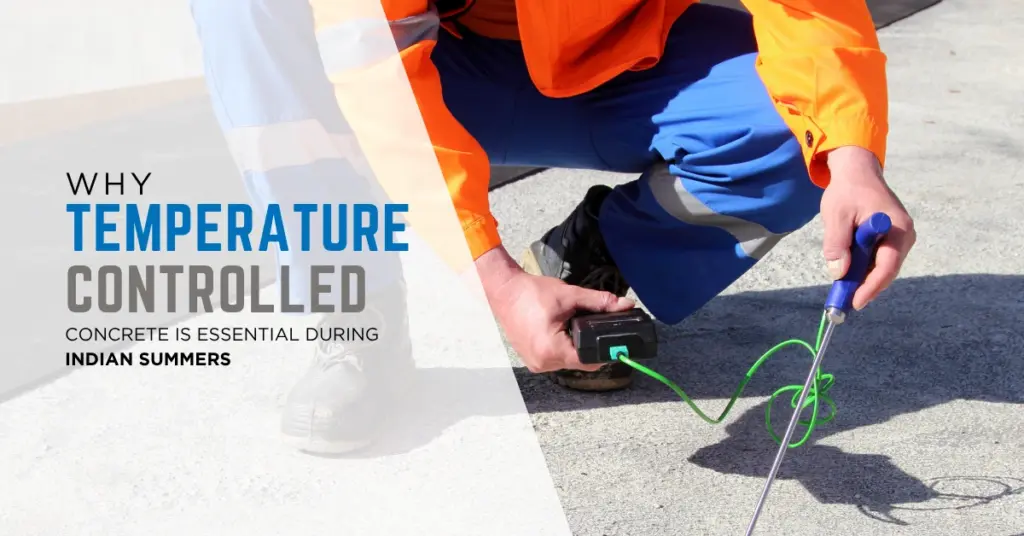
Why Temperature-Controlled Concrete Is Essential During Indian Summers
June 29, 2026
If you’ve ever touched a steel railing in May in Hyderabad or walked barefoot on a terrace in the afternoon, you already know how brutal Indian summers can be. Now imagine freshly poured concrete sitting in that same heat, absorbing temperatures that can push past 45°C, and you begin to understand why summer concreting is one of the most technically demanding challenges in construction.
Concrete, at its core, is a chemical system. The moment cement meets water, a series of hydration reactions begin that will ultimately determine how strong, durable, and crack-resistant the final structure turns out to be. Heat, particularly the extreme, sustained heat of an Indian summer, accelerates and distorts these reactions in ways that can quietly devastate structural integrity.
Temperature-controlled concrete isn’t a luxury reserved for large infrastructure projects. It’s a necessary standard for any serious construction happening between March and June across India. Here’s why.
What Happens to Concrete in Extreme Heat
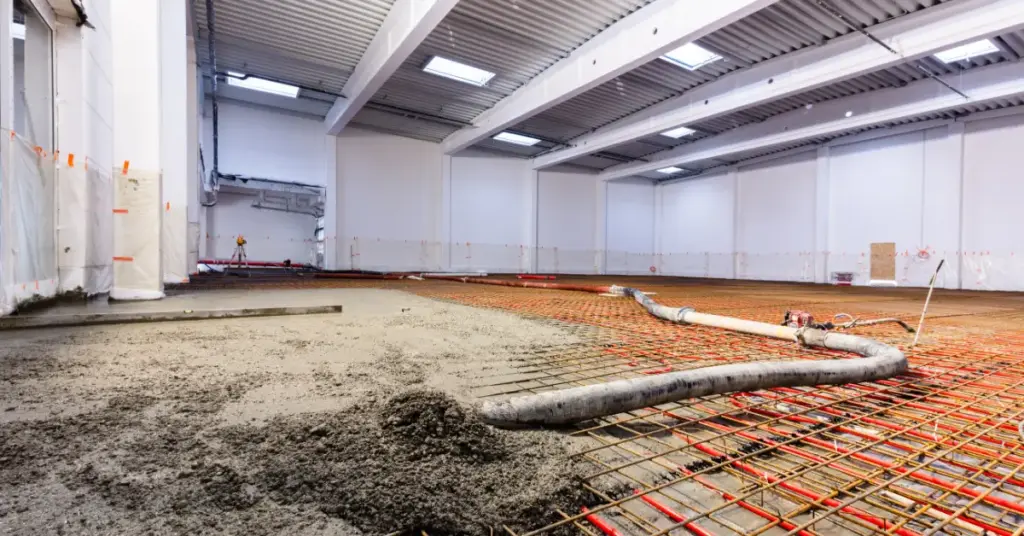
To understand why temperature control matters, you need to understand what heat does to fresh concrete at a chemical level.
When the ambient temperature rises above 35°C, and in cities like Hyderabad, Nagpur, or Ahmedabad, it regularly crosses 42–45°C, several problems begin to compound simultaneously.
First, water evaporates from the concrete surface faster than the cement hydration process can absorb it. This rapid moisture loss causes plastic shrinkage cracking , fine surface cracks that appear within the first few hours of placement. These cracks may look minor, but they create pathways for moisture, carbonation, and chlorides to penetrate the structure over time, accelerating long-term deterioration.
Second, the rate of cement hydration speeds up dramatically. This sounds like a good thing, faster setting, faster strength gain. But what actually happens is that the early strength comes at the cost of long-term strength. Concrete that sets too fast in heat develops a coarser internal microstructure, which is weaker and more porous than concrete that hydrates slowly under controlled conditions.
Third, the workability of the mix drops sharply. As temperature rises, ready mix concrete stiffens faster in transit and on-site. If workers try to compensate by adding water at the site, a shockingly common practice, the water-cement ratio shoots up, and the concrete mix ratio that was carefully engineered at the batching plant becomes meaningless.
Why the Concrete Mix Design Gets Compromised in Summer
Every concrete mix design , whether it’s M20 grade concrete for a residential slab, M25 concrete mix ratio for a column, or M30 ready mix concrete for a high-rise structure, is calibrated for a specific set of conditions. Temperature is one of the most critical variables in that calibration.
When concrete leaves an RMC plant at, say, 30°C and travels 30 minutes to a summer site, it can arrive at 35–38°C or higher. By the time it’s placed, vibrated, and levelled, valuable workability time has already been consumed by heat. The concrete’s slump, its measure of flowability, may have dropped significantly from what was specified.
This is a problem that cascades. Reduced slump makes proper compaction harder to achieve. Poor compaction leaves voids and honeycombing in the structure. Honeycombed concrete is structurally inferior and highly vulnerable to rebar corrosion, which in turn leads to spalling and eventual structural failure.
The mix proportion of concrete, once disrupted by heat-induced stiffening or unauthorised water addition, cannot be restored on-site. What was batched as M25 may effectively perform as M15 in the field. This is the hidden cost of ignoring temperature control in summer concreting.
What Temperature-Controlled Concrete Actually Means
Temperature control in concrete is not a single technique, it’s a set of coordinated practices applied at the batching plant, in transit, and at the construction site to keep concrete within a safe temperature range throughout the process.
At a properly equipped RMC plant, temperature control begins with the raw materials. Chilled water or ice is used instead of regular water in the concrete mix to lower the initial temperature of the batch. Aggregates, which absorb and retain a significant amount of heat, are stored under shade or sprinkled with water to keep them cool before use. In some cases, liquid nitrogen is used for rapid cooling of the mix before dispatch.
The target is to keep the concrete temperature at the point of discharge below 30°C as per IS 7861 (Part 1), India’s code of practice for extreme weather concreting. Some specifications for critical infrastructure push this limit even lower.
In transit, transit mixers keep the drum rotating to prevent stiffening and heat build-up. Scheduling dispatches in early morning hours, before 7 AM where possible, reduces the ambient temperature exposure during both transit and placement.
At the site, sun shades over the pour area, pre-wetting of formwork and reinforcement, and prompt curing measures all contribute to keeping temperature within acceptable limits.
The Role of Ready Mix Concrete in Hot-Weather Construction
There is a reason why temperature control in concrete is practically impossible to achieve consistently with site-mixed concrete. On a manual batching site, the tools, controls, and data required to monitor and adjust concrete temperature simply don’t exist. You can’t chill your site mixer’s water supply. You can’t measure aggregate moisture and temperature and compensate in real time. You can’t guarantee the concrete mix design batch after batch.
This is where ready mix concrete, produced at a certified, well-equipped batching plant, makes an enormous difference during Indian summers.
At an Aparna RMC plant, concrete is batched using computerised mix design systems that account for temperature conditions. Chilled water systems are in operation during peak summer months. Aggregate temperature and moisture are checked before each batch. The concrete is dispatched in transit mixers that are calibrated for summer delivery schedules, ensuring that the time from batching to placement is minimised.
This level of consistency is simply not replicable on a manual site, regardless of the skill of the workers involved. For anyone asking about ready mix concrete near me during the summer months, the answer isn’t just about convenience, it’s about getting concrete that will actually perform as designed.
Grade-Wise Considerations for Summer Concreting
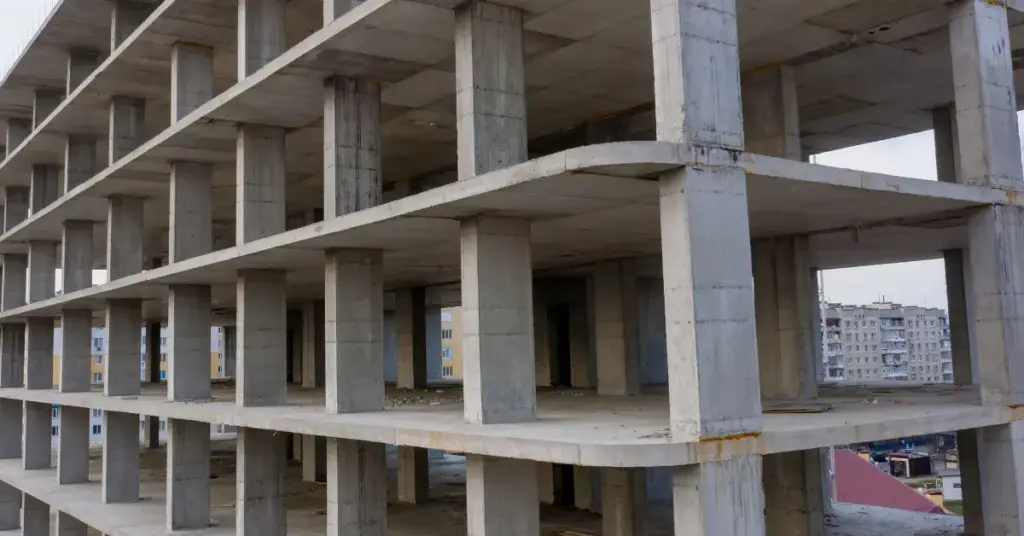
Different concrete grades respond to summer heat in different ways, and the risks scale with the structural importance of the element being cast.
For M10 concrete ratio applications, lean mixes used for blinding or non-structural fill, summer heat is an inconvenience but not a crisis. The structural consequences of minor strength variation are limited.
For M20 grade concrete used in residential slabs and beams, temperature control becomes important. A strength reduction of even 10–15% due to poor summer practices can push the concrete below the minimum structural threshold.
For M25 concrete mix ratio and above, used in columns, transfer beams, foundations of multi-storey buildings, and high-performance applications, temperature control is non-negotiable. These grades are specified because the design demands a guaranteed minimum strength. If summer heat compromises that, the consequences are structural, not cosmetic.
For high-grade ready mix concrete in infrastructure applications (bridges, flyovers, industrial floors), temperature-controlled concreting is explicitly specified in the project contracts. Contractors who don’t comply risk rejection of entire pours during quality audits.
Common Summer Concreting Mistakes That Destroy Structural Strength
Beyond the temperature issue itself, summer conditions encourage a series of on-site shortcuts that make things worse.
- Pouring during peak afternoon hours between 11 AM and 4 PM, exposes fresh concrete to the highest ambient temperatures of the day. The concrete stiffens rapidly, workability is lost, and the window for proper compaction narrows dangerously.
- Inadequate or delayed curing is especially damaging in summer. Concrete that isn’t kept moist within the first few hours of placement in hot weather loses water so fast that the hydration process stalls. The result is a surface that appears solid but has never reached its design strength internally. Seven days of proper curing, using wet hessian, water ponding, or curing compounds, is the minimum standard regardless of how hot the weather feels.
- Using the wrong admixtures or no admixtures is another common mistake. Retarding admixtures are specifically designed to slow the setting time of concrete in hot weather, extending the workability window so that placement and compaction can be done properly. Ignoring admixture design during summer is like driving without brakes in heavy traffic. It might work for a while, but the first time it doesn’t, the consequences are severe.
- Neglecting to pre-wet reinforcement and formwork means the steel and timber absorb moisture from the fresh concrete the moment it’s placed, accelerating local drying and creating weak interface zones. A simple spray of water on the reinforcement cage and formwork surface before pouring is a small step that makes a measurable difference.
How Aparna RMC Supports Summer Construction Projects
Aparna RMC has been supplying ready mix concrete in Hyderabad and across South India for nearly two decades, and summer concreting is something the team has dealt with extensively. With RMC plants spread across five Indian states, Aparna RMC is positioned to serve both large infrastructure projects and residential construction sites with consistent, temperature-managed concrete supply.
For summer projects, Aparna RMC offers concrete mix designs adjusted for hot-weather conditions, including admixture packages, chilled water batching where required, and time-sensitive delivery schedules that align with the cooler parts of the day. The RMC calculator on the Aparna RMC website makes it easy to estimate concrete volume requirements, and the team can advise on the right grade and mix design for your specific project conditions.
To further support summer concreting, Aparna RMC offers TempCrete, a specialized concrete solution designed to maintain workability and performance even under high ambient temperatures. TempCrete helps reduce the challenges associated with hot-weather concreting, ensuring consistent quality from batching to placement. Combined with Aparna RMC’s large fleet of transit mixers and robust logistics network, projects benefit from timely deliveries, reduced turnaround times, and uninterrupted concrete supply, helping construction teams stay on schedule even during peak summer months.
Whether you’re looking for ready mix concrete suppliers for a housing project, a commercial structure, or an industrial floor, the quality controls in place at every Aparna RMC batching plant ensure that what you receive is what was designed, not a heat-compromised version of it.
Closing Thoughts
The Indian summer is relentless, and concrete doesn’t get a break from it. Every pour made in peak summer heat without temperature control is a gamble, and in construction, structural gambles have consequences that show up years down the line, long after the site has been handed over.
Temperature-controlled concrete isn’t about over-engineering. It’s about making sure that what is designed on paper is what actually gets built in the ground. Ready mix concrete from a certified RMC plant, produced with proper summer protocols, delivered on schedule, and placed using correct site practices, is the single most effective way to ensure structural quality doesn’t get cooked away by the summer sun.
Plan your summer construction with the right concrete partner, and your structure will thank you for decades.
FAQ: Temperature-Controlled Concrete in Indian Summers
Q1. What is the maximum permissible temperature for concrete at the time of placement?
The temperature of concrete at the point of discharge should not exceed 30°C during hot-weather concreting. For critical structures, many project specifications set even stricter limits.
Q2. Can regular ready mix concrete be used during peak summer months in India?
Yes, but it must be produced with temperature control measures in place, chilled water, cooled aggregates, and adjusted admixtures. Standard RMC without these adaptations will perform below design strength in extreme heat. Always confirm with your RMC concrete supplier whether their plant has hot-weather protocols.
Q3. What is the best time of day to pour concrete during Indian summers?
Early morning , ideally before 8 AM, is the best window for summer concrete placement. This takes advantage of cooler ambient temperatures and reduces the risk of rapid moisture loss and accelerated setting.
Q4. Does heat affect all concrete grades equally?
No. Higher-grade mixes like M25 and M30 ready mix concrete are more sensitive to temperature deviations because they are designed to hit specific strength targets. Lower-grade mixes used for non-structural purposes are less critically affected.
Q5. How does ready mix concrete help with temperature control better than site-mixed concrete?
Ready mix concrete is produced at a batching plant equipped with chilled water systems, aggregate temperature monitoring, computerised mix design, and quality-controlled dispatch scheduling. None of these controls are achievable on a manual mixing site.
Q6. How do I calculate how much ready mix concrete I need for my summer project?
Aparna RMC offers a free RMC calculator on their website, simply enter your slab dimensions or structural element details, and you’ll get an accurate volume estimate. The team can then help you plan delivery scheduling suited to summer conditions.