
The Cost of a 30-Minute Delay: Why Timing Matters in Concrete Construction
July 8, 2026
Ask anyone managing a construction site, and they’ll tell you delays happen constantly. A late delivery, a traffic snarl on the way to the site, a crew that starts twenty minutes behind schedule — most of the time, this stuff just gets absorbed into the day. Nobody panics over it.
Concrete is different. Once cement meets water, the clock starts, and it doesn’t stop for traffic. What looks like a small scheduling hiccup on paper can, in practice, decide whether a pour holds up the way it’s supposed to for the next fifty years or quietly carries a weakness nobody catches until much later.
So what actually happens in those thirty minutes? Why do reliable ready mix concrete suppliers treat timing like it’s non-negotiable? And what does it really cost when that timing slips? That’s what we’re getting into here.
Why Concrete Has a Clock Running From the Moment It’s Batched
When the second cement and water come together, a chemical reaction called hydration kicks off. This is the same reaction that eventually gives concrete its strength — but it also means the material is never sitting still. It’s changing from the moment it leaves the plant, whether anyone on site is ready for it or not.
Under normal conditions, ready mix concrete remains workable for about 90 minutes after batching, although the exact duration depends on the mix design, temperature, and the use of admixtures. That’s the window where it can still be poured, compacted, and finished properly. Push past that, and the mix starts stiffening up, which compromises both how it sets structurally and how it finishes on the surface.
In India, especially through the summer months, that 90-minute figure isn’t something you can rely on blindly. Once temperatures climb past 40°C, hydration speeds up and the working window shrinks. A delay that wouldn’t matter much in cooler weather suddenly becomes a real problem in peak summer heat, because every extra minute in transit is eating into a window that’s already tighter than usual.
This is really the whole reason timing gets treated so seriously by RMC suppliers who know what they’re doing. Transit time isn’t an afterthought tacked onto delivery — it’s baked into the mix design from the start.
What Actually Happens in a 30-Minute Delay
Here’s the thing about a thirty-minute delay — it doesn’t show up as some dramatic failure on site. It’s quiet. Which is exactly why it’s risky.
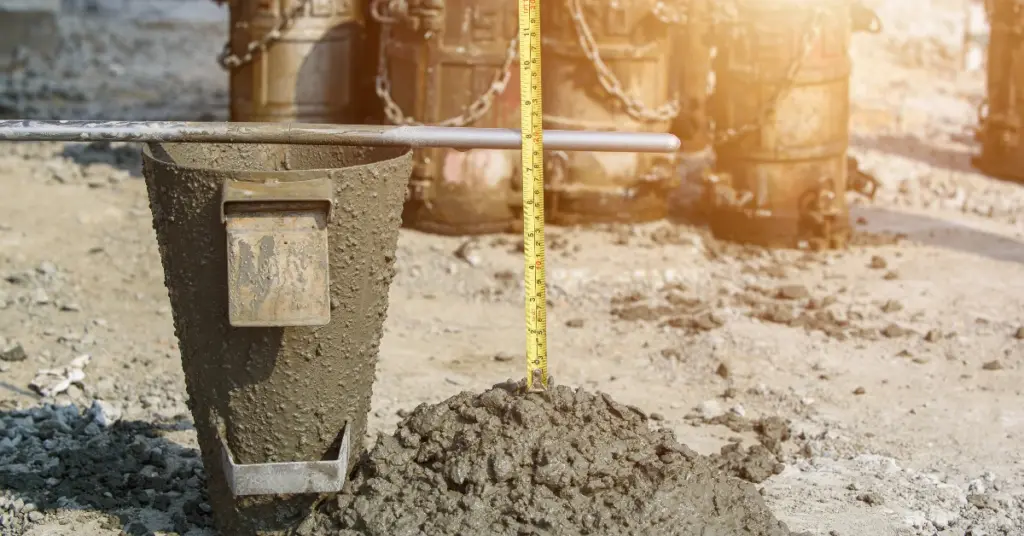
The mix starts losing slump: Slump tells you how workable concrete is — basically how easily it flows and fills the formwork. As time passes, the mix stiffens naturally, and slump drops with it. A load that left the plant at the right consistency for pumping might show up on site noticeably stiffer than expected.
Someone reaches for a hose: This is the part where a delivery delay turns into an actual structural issue instead of just an annoying wait. When concrete looks too stiff to place easily, the natural instinct on site is to add water and loosen it back up. It feels harmless, even helpful. But that one decision throws off the water-cement ratio that was carefully calculated into the original mix design. The concrete might still look fine going into the formwork — it just won’t be as strong once it cures.
If workability needs to be maintained, only approved admixtures should be used under controlled conditions. Adding water on site is not recommended because it can weaken the concrete by changing the water-cement ratio.
Compaction gets tougher: Even if nobody adds water, stiffer concrete is genuinely harder to work into tight rebar zones or complex formwork shapes. Get this wrong, and you end up with honeycombing or trapped air pockets, both of which quietly chip away at the strength of that section.
Cold joints become a real risk: If a delay hits one load in a sequence, there’s a decent chance the next batch won’t bond properly with what’s already been placed. That creates a cold joint — a weak plane running through what’s meant to be one continuous structural element. Once it’s there, no amount of surface patching brings back the original strength.
None of this is visible on the day it happens. It tends to show up weeks or months down the line, as cracking or reduced durability, and by then, good luck tracing it back to a thirty-minute delay on some Tuesday afternoon.
Why 30 Minutes Is Rarely Just 30 Minutes
In real life, a delay rarely stays isolated. It usually sets off a chain reaction that gets worse as the day goes on.
Take a mid-sized commercial pour needing six loads of transit mixer. If the first one is held up thirty minutes by traffic or a scheduling slip at the plant, everything after it shifts too. The crew that was standing ready is now just standing around. The pump that was primed might need re-priming. The whole sequence was planned assuming a certain delivery rhythm, and that rhythm just broke.
If the delay means a later load misses its working window entirely, the site is stuck choosing between two bad options — water down the stiffened concrete and accept weaker strength, or reject the load and risk a gap that turns into a cold joint. Either way, the structural outcome takes a hit, and either way, it traces back to something that initially looked like nothing more than a minor scheduling annoyance.
The Real Cost of Getting Timing Wrong
People tend to underestimate what a delivery delay actually costs, mostly because nobody adds it all up properly.
There’s the obvious cost — a full pour crew standing idle racks up real money fast, between wages, equipment hire, and lost time. There’s a remediation cost if the delay leads to honeycombing or a cold joint that needs to be broken out and re-poured. And then there’s the cost that rarely makes it onto a budget sheet but ends up being the biggest one: what it does to the project timeline.
On multi-storey builds, structural pours usually sit right on the critical path. Delay the concrete on one floor, and you delay formwork removal, the next pour, MEP rough-in, and finishing — the whole sequence for that level slides. String enough of these delays together across a high-rise project and you’ve pushed the handover date back by weeks, with penalty clauses kicking in for every day past the agreed deadline.
What started as a thirty-minute hold-up on one delivery can quietly turn into one of the most expensive things on the entire project — and nobody saw it coming.
How Reliable Ready Mix Concrete Suppliers Manage Timing as a Structural Priority
This is exactly why suppliers who take quality seriously treat timing as part of the engineering, not just the logistics.
At Aparna RMC, every order starts with a clear picture of the pour window the site actually needs, and production at the nearest plant is scheduled around that — not around whatever’s easiest for the plant. Proximity matters here more than people realise. With 36 plants spread across five states, Aparna RMC can serve most urban sites within a transit window that doesn’t leave much room for things to go wrong.
Every transit mixer in the fleet runs on live vehicle tracking, so site teams can actually see where a load is at any moment instead of just hoping it shows up on time. That means if something is running late, there’s still time to adjust the pour sequence or give the crew a heads-up, rather than finding out the hard way when the truck doesn’t pull in when expected.
For bigger pours needing several loads, the delivery cadence gets planned out in advance based on how fast the site can place concrete — so each load lands inside a window that protects the bond with the previous one instead of leaving a gap that turns into a cold joint.
Put together — plant network, careful batching, tracked logistics — this is what lets ready mix concrete actually deliver on what it promises: concrete that performs exactly the way it was designed to, because every variable, timing included, was handled before the truck ever left the gate.
Final Thoughts
Thirty minutes doesn’t sound like a big deal when you’re looking at a construction schedule. But in the life of a concrete pour, it can be the line between a structure that performs exactly as engineered and one quietly carrying a weakness for decades. The real mistake is treating concrete delivery like a logistics problem when it’s actually a structural one.
Whether you’re pouring a residential slab or running a multi-tower commercial project, choosing a supplier with the plant network, the tracking, and the discipline to actually honour a pour window isn’t a small thing — it’s protecting the integrity of whatever you’re building. Plan your pour windows properly, communicate them clearly to your ready mix concrete supplier, and don’t write off a delay as “not a big deal.” With concrete, it always is.
FAQ: Concrete Delivery Timing, Your Questions Answered
Q1. How long does ready mix concrete stay workable after batching? Around 90 minutes under normal conditions. In Indian summer heat, that window can drop to 60–70 minutes, which makes transit time a genuine quality factor, not just a scheduling one.
Q2. What happens if concrete shows up past its working window? It stiffens and gets harder to place properly. Adding water fixes the workability but wrecks the water-cement ratio and weakens the final strength. The right call is usually to reject the load rather than force it in.
Q3. Why does adding water to delayed concrete actually weaken it? The water-cement ratio in any mix design is set to hit a specific strength target. Add more water than that, and you dilute the cement paste — the concrete gets more porous and ends up weaker, even though it might look perfectly normal going into the form.
Q4. Does plant distance really make a difference to delivery timing? Yes, more than people assume. Shorter transit means less exposure to traffic and more of the working window left when the truck arrives. It’s a big part of why sourcing concrete from a nearby plant isn’t just about convenience — it protects the pour itself.
Q5. What exactly is a cold joint, and how does it connect to delays? It’s what happens when fresh concrete is placed against concrete that’s already started setting — usually because there was a gap between loads. It leaves a structural weak point that can’t really be fixed afterward, which is why delivery cadence matters so much on multi-load pours.
Q6. How does Aparna RMC handle timing on bigger pours? Delivery cadence gets mapped out ahead of time based on how fast the site can actually place concrete, and every mixer is tracked live through VTS. With 36 plants across five states, Aparna RMC keeps transit exposure low and protects the pour window regardless of project size.