
What Really Happens Between Ordering Ready Mix Concrete and the First Pour?

July 10, 2026
Most people on a construction site only see one part of the concrete story — the moment the transit mixer rolls in and the drum starts turning. What they don’t see is everything that happened before that truck even left the plant. And honestly, that’s the part that decides whether the pour goes smoothly or turns into a headache.
There’s a fair bit that happens between placing an order for ready mix concrete and actually getting concrete into the formwork. It’s not just “call the plant, truck shows up.” There’s mix design, batching, quality checks, transit planning — a whole sequence that, when done right, you barely notice. When it’s done badly, you notice immediately, usually in the worst possible way.
This blog walks through that entire sequence, step by step, so you know exactly what should be happening behind the scenes every time you place an order.
It Starts With a Conversation, Not a Delivery Slip
A lot of people assume ordering concrete is basically like ordering any other building material — you specify a quantity, pick a delivery date, and that’s that. It’s not quite that simple, and honestly it shouldn’t be.
The order itself needs to nail down a few things that matter a lot more than they might seem. What grade of concrete does the job need — M20, M25, M30 ready mix concrete, or something higher depending on the structural element? What volume, in cubic metres? What slump is required for the pumping and placement method being used? And critically, what’s the pour window — meaning, when exactly will the site actually be ready to receive and place the concrete?
That last point gets glossed over more often than it should. A pour window isn’t just “sometime Tuesday morning.” It’s a specific time frame during which reinforcement has been inspected, formwork is checked, the pump is positioned, and the crew is standing by. Getting this wrong on the ordering call is where a lot of downstream problems quietly begin.
At Aparna RMC, this conversation between the site engineer and the technical team is treated as the actual starting point of the pour — not just an administrative step before the real work begins.
Mix Design Gets Locked In Before a Single Ingredient Is Touched
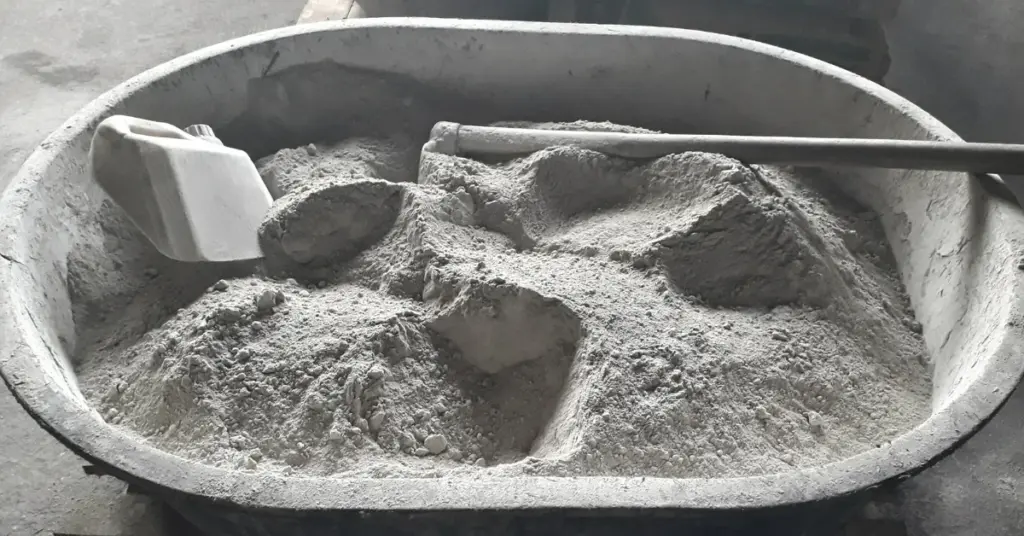
Once the order details are confirmed, the relevant batching plant starts working on the concrete mix design specific to that order. This isn’t a generic recipe pulled off a shelf. It’s calibrated to the grade required, the slump needed, and the actual conditions the concrete will face between batching and placement.
If the pour is happening during peak summer heat, the mix might include a retarder to buy a bit more working time before the concrete starts setting. If it’s a large mass pour — something like a raft foundation or a thick bridge deck — temperature-controlled concrete formulations come into play to manage the heat building up inside the pour as it cures. None of this is improvised on the day. It’s worked out and signed off before a single bag of cement is opened.
This is really where the foundation for a successful pour gets laid, long before anyone on site sees a truck.
The Plant Starts Prepping a Couple of Hours Before Dispatch
About two hours ahead of when the truck needs to leave, the plant kicks into preparation mode. Aggregates get measured and loaded into the batching system. Cement gets weighed out from the silos. Water gets measured against the exact water-cement ratio that was approved in the mix design. Admixtures get dosed in at the right quantities.
At an Aparna RMC plant, all of this runs through SCADA-automated systems, which basically means every single ingredient is weighed to spec rather than eyeballed by someone with a shovel. The system logs each batch against the order it belongs to, which is what creates the batch certificate that travels with the delivery — your paper trail proving exactly what went into that load.
Before the drum even starts properly mixing, a slump test gets run on the fresh concrete right there at the plant. If it’s outside the range it should be in, the batch gets adjusted or scrapped before it ever leaves the gate. So by the time concrete is dispatched, it’s already passed its first real check.
Then the Clock Starts — Dispatch and Transit
The mixer gets loaded, sealed up, and sent off. And from this exact moment, time becomes the most important variable in the whole process. Hydration is already underway — it started the second the cement met water — and the concrete has roughly a 90-minute working window under normal conditions. In Indian summer heat, that window often shrinks to somewhere around 60 to 70 minutes.
This is exactly why how close the plant is to your site actually matters, and not in some abstract logistics sense — it directly affects pour quality. Aparna RMC runs 36 plants across five states, specifically so urban construction sites can be served within a transit time that doesn’t eat too far into that working window. In a city like Hyderabad, the nearest plant is usually somewhere around 20 to 30 minutes from most active construction zones.
While the truck is moving, the drum keeps turning at mixing speed to keep everything homogeneous. Once it gets to the site, it shifts down to a slower agitating speed — enough to keep the mix workable without overworking it.
Arrival on Site: The Checks That Actually Matter
The truck shows up. Before any of that concrete goes anywhere near the formwork, there are three things that should happen — and skipping any of them is asking for trouble later.
First, someone checks the delivery challan against what was actually ordered — grade, volume, mix design reference, plant batch number. This is the first real confirmation that what arrived matches what was requested.
Second, an on-site slump test is run. A sample comes out of the drum, goes into a standard slump cone, the cone gets lifted, and the distance the concrete settles gets measured. If that number falls outside the range the structural engineer specified, that load needs to be flagged before it goes anywhere.
Third, cube samples are taken. Six standard cube moulds get filled from that same batch, sealed, labelled, and set aside to cure alongside the actual structure. These cubes become the quality record — proof of exactly what was poured, where, and when, in case anyone needs to check later.
The Actual Pour: Where Timing and Technique Meet
Discharge starts. Concrete flows out of the drum, into the pump, through the line, and into the formwork. The rate has to be managed carefully against how fast the crew can place and compact it — too fast, and it piles up faster than it can be worked properly; too slow, and parts of it start setting before the rest is in.
For slab work, concrete typically goes in layers and gets spread with a screed board. For columns and walls using regular concrete, each layer needs to be vibrated to get rid of air pockets and make sure the mix fully wraps around the reinforcement. With self-compacting concrete, the mix flows into place on its own and settles without needing mechanical vibration — which is a real advantage in tight rebar zones where getting a vibrator in is genuinely difficult.
Throughout this, the site engineer is watching for warning signs — segregation, where the aggregate starts separating from the paste, excess bleed water sitting on top, or spots that just aren’t filling properly.
Final Placement and the Start of the Real Waiting Game
Last bit of concrete goes in, the mixer gets washed out, and it heads back. The surface gets screeded level, floated to close it up, and finished to whatever texture the project calls for.
At this point, the concrete is at its most fragile. Everything that happens over the next week decides how strong it ends up being at 28 days.
Curing — The Step Everyone Knows About and Plenty Still Get Wrong
Curing starts the moment placement wraps up, and it needs active attention, not just being left alone and hoping for the best. The surface gets covered with wet hessian or polythene right away to hold moisture in. Water gets applied morning and evening, minimum, for at least seven days.
During peak summer, exposed surfaces sometimes need extra shading to slow down how fast moisture evaporates. For big mass pours like raft foundations or thick retaining walls, internal temperature monitoring can catch thermal cracking before it actually becomes a problem — which is where temperature-controlled concrete formulations are worth specifying upfront.
Seven Days In: The First Real Check
The 7-day cube samples head to the lab. Results should come back somewhere around 65 to 70 percent of the expected 28-day strength. For an M25 mix, that’s roughly 16 to 18 MPa at the 7-day mark. If the numbers come back noticeably lower than that, it’s a signal something needs investigating — the mix, the curing, or even how the cubes were prepared — and it’s much better to catch that now than three floors later.
28 Days Later: The Number That Actually Matters
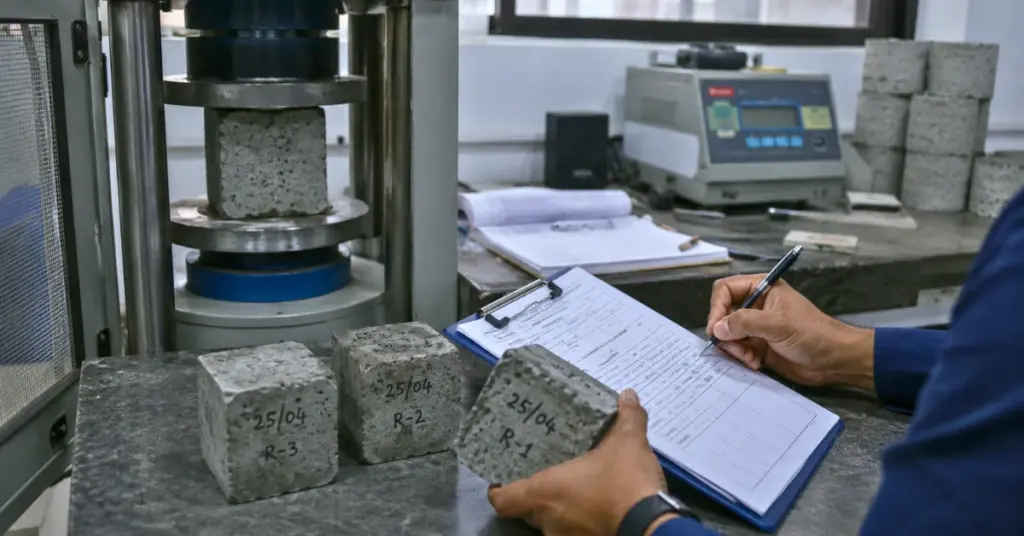
The 28-day cubes get tested, and this result is the one that really counts. It gets documented, filed against the structural drawings, and becomes part of the permanent quality record for that pour. Meets or beats the specified grade — great, that element is verified. Falls short — the structural engineer needs to be looped in and remediation gets assessed.
This whole loop, from the first conversation about mix design all the way through to that 28-day result, is really what separates a pour that was actually managed properly from one that just got lucky with the weather.
Final Thoughts
There’s a lot more happening between placing an order and that first cube of concrete getting placed than most people on site ever see. And honestly, that’s exactly the point — when every step in this sequence is handled properly, the pour itself should feel almost uneventful. No drama, no surprises, just concrete that behaves exactly the way it’s supposed to.
Knowing what’s actually meant to happen at each stage gives you a much better sense of what to expect from your supplier, and what to ask if something feels off. Aparna RMC manages this entire sequence — from mix design through to batch-certified delivery — across 36 plants in five states, so the process behind your pour is as solid as the structure it’s going into.
FAQ: Ready Mix Concrete Delivery, Your Questions Answered
Q1. How far in advance should I place a ready mix concrete order? Ideally 24 to 48 hours before the pour. That gives the plant enough time to finalise the correct mix design, schedule production properly, and line up transit mixers around your pour window — especially important during busy construction months when plants are juggling multiple orders.
Q2. What is a slump test and why does it happen both at the plant and on site? A slump test checks how workable fresh concrete is. Testing it at the plant catches problems before dispatch. Testing it again on arrival confirms transit hasn’t changed it beyond an acceptable range, which is the quickest way to know the load matches what was ordered.
Q3. Why does concrete get tested at both 7 days and 28 days? The 7-day test gives an early read on how strength is developing — usually 65 to 70 percent of final strength — so issues can be caught before the next pour happens above it. The 28-day test is the official number that confirms whether the concrete actually hit its specified grade.
Q4. What should happen if the truck is delayed and concrete arrives past its working window? It shouldn’t be placed. Adding water to make it workable again ruins the strength, so the right move is to reject that load and arrange a replacement. This is exactly why tracking each load in transit matters — delays get caught early enough to actually do something about them.
Q5. Does the concrete mix design change depending on weather conditions? Yes. Hot-weather pours often need a retarder to extend the working window, while large-mass pours may need temperature-controlled formulations to manage internal heat buildup. These adjustments get planned into the mix design before the order is even batched, not improvised on the day.
Q6. How does Aparna RMC keep the process consistent across so many plants? Every plant runs on SCADA-automated batching following the same approved mix design standards, with pre-dispatch testing and batch certification on every load. Combined with VTS-tracked transit mixers, this keeps the process — and the quality — consistent whether you’re ordering from a plant in Hyderabad or anywhere else in Aparna RMC’s five-state network.